Showing posts with label The Urim and the Thummim. Show all posts

Thursday, July 28, 2011

The Illumination of the Urim and the Thummim

There was only one word to describe the New Testament temple priesthood: dead. Jesus would call them “wicked and adulterous” (Matthew 16:4) in their face. He would even deride them in their fraud when He taught the disciples to “be careful” and “be on…guard against the yeast of the Pharisees and the Sadducees” (verse 6). Jesus, in truth, had a good time slapping them with their own stupidity with such phrases as “you are in error because you do not know the Scriptures” (22:29) and “have you not read what God said to you” (verse 31). In His time, the high priesthood was shared and swapped  between to known men of a single family named Annas (Luke 3:2) and Caiaphas (John 18:13 and 24). Their priesthood was no spiritual force but one political party made fat in Roman cronyism.

National Geographic Society/Corbis
And where were the Urim and the Thummim in all these? In 586 B.C. the Babylonians headed by Nebuchadnezzar trampled over the kingdom of Judah and exiled its people into captivity; and everything they found of treasure, “all articles from the temple of God both large and small” (2 Chronicles 36:18), which meant articles as large as the Ark of the Covenant and those as small as the Urim and the Thummim, were ransacked and carried away by the invaders before or as they tore down the Temple. The Babylonian Captivity ended a great regiment of Temple worship. In Babylonia, Jehovic worshippers had to move on and do away with the Urim and the Thummim, the Ark, the Temple and the Promised Land it stood on. It was in fulfillment of a prophecy made by Jeremiah stating that “’the ark of the covenant of the Lord’…will never enter their minds or be remembered; it will not be missed, nor will another one be made” (Jeremiah 3:16).

Burstein Collection/CORBIS
More than fifty years past and the Jews had given their religion a new look with synagogues, to replace the Temple, and “lengthy prayers” (Luke 20:47) for the ritual sacrifices. The prescribed Mosaic furniture, which became symbols of permanence, became nothing but relics so that when the Jews returning to Jerusalem decided to re-erect the Temple and reestablish its worship, they had to make considerable adjustments to compensate with the missing aspects that had long been lost since the Babylonian Capitivity. The passages of Ezra 2:63 and Nehemiah 7:65 had to deal with the missing Urim and Thummim that the governor, Nehemiah, ordered the descendants of the original priesthood “not to eat any of the most sacred food until there was a priest ministering with the Urim and the Thummim.” As we have already learned, it was through the use of the sacred lots that the priestly duties were delegated.

http://www.brooklynmuseum.org/opencollection
Yet while we never hear of the Ark of the Covenant appearing in the New Testament, the function of the Urim and the Thummim makes a comeback in Luke 1:9 when it sets up a priest named Zechariah, “who belonged to the priestly division of Abijah” (verse 5) to “go into the temple of the Lord and burn incense” (verse 9). This was a very important moment as Zechariah came before an angel of the Lord standing at the right side of the altar personally informing him of the birth of John the Baptist.
At this point we can suspect two scenarios, whether the original Urim and the Thummim were rediscovered after some time around the time the Temple was rebuilt or they were recreated for the sake of their role of bringing the enlightenment of God’s will and in matters of ritual. Yet as far as John the Baptist and Jesus Christ were concerned, the scenarios did not matter. The Temple Nehemiah rebuilt was again to be, in one way or another, phased out, and the Urim and the Thummim were to lose the glow to the role of the Holy Spirit.

Alfredo Dagli Orti/The Art Archive/Corbis
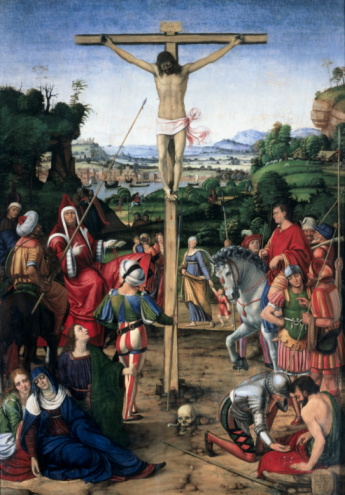
In one way or the other, the Temple Nehemiah rebuilt was again to be phased out. The moment Jesus gave up His Spirit on the cross, the thick beautiful holy Temple veil that shielded the Ark of the Covenant in its chamber was “torn in two from top to bottom” (Matthew 27:51). The significance of this phenomenon revealed the end of the human high priesthood. The Book of Hebrews’ “great high priest” (4:14), Jesus Christ, claimed all functions and fulfillment of every Temple trapping and furniture, from the least to the greatest. Before His death, He pictured the death of His physical body with the destruction of the Temple. Later on, the Apostle Paul would use the analogy of the Temple for the physical body of every believer (1 Corinthians 3:16). But on the other hand, there is a specific prophecy Jesus made that referred to the actual destruction of the Temple of Jerusalem. In Matthew 24 as He and His disciples were storming out of the Temple, He said, “I tell you the truth, not one stone here will be left on another; every one will be thrown down” (Matthew 24:2). In 70 A.D. the Romans did destroy the Temple along with the massacre of 600,000 defenseless Jewish civilians.

Elliot Elliot/Johner Images/Corbis
The Hanukkah menorah is a tradition straight out of the Maccabean  period 167 to 63 B.C., a turbulent period of Jewish history when Greek oppression reached blasphemous extent that King Antiochus IV erected an altar of Zeus in the Temple of God where pigs were ordered sacrificed.

Almost three decades after Ezra successfully led home the second wave of Jewish repatriates from the Persian Empire, the voice of God was never heard, not through His prophets; and His will could never be divined, not even by the Urim and the Thummim. For four hundred years, the entire nation of Israel lived each day like the final moments of Saul: seeking and inquiring of the Lord in vain, answering them not by dreams or Urim or prophets. Because of this the trappings of the Temple lost their appeal to many; and though the furnishings continued to maintain the respect of all Israel, they failed to keep the people’s confidence in the matters of God’s will. It was in this setting that spurred the popularity of the Pharisaic sect and for many to abandon the Temple culture. But there was another sect the rise of which had silently revealed in part to the priest Zechariah; and in this sect would rest the power of the sacred emblems to again unveil the will of God.

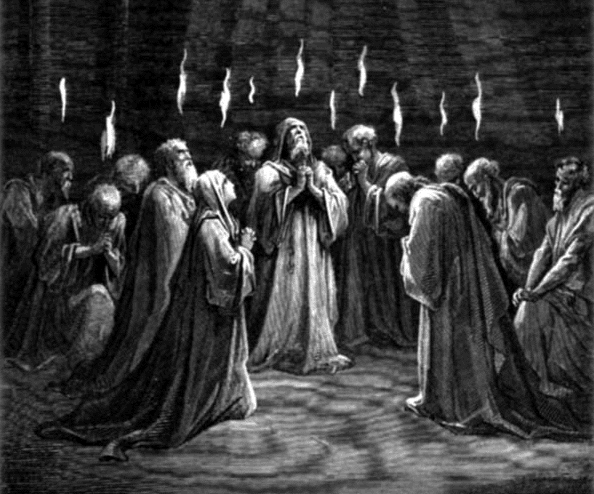
The word urim means “lights,” significant for the illumination that the sacred emblems brought. Urim is also the plural of ur, or flame. On Pentecost the Holy Spirit appeared in the form of “tongues of fire that separated and came to rest on each of” the disciples and the believers who were assembled in prayer (Acts 2:3).

Jesus had explicitly instructed His disciples “not [to] leave Jerusalem, but wait for the gift…promised” (Acts 1:4), by which He meant the baptism of the Holy Spirit (verse 5). Before they ever did anything for God—“preach the good news” (Mark 16:15), “make disciples of all nations, baptizing them in the name of the Father and of the Son and of the Holy Spirit, and teaching them to obey everything” Jesus had commanded them (Matthew 28:19)—the disciples had to be first empowered by the Holy Spirit. There was, however, one thing they carried out before the awaited event. It was to fulfill the prophecy in Psalm 109:8 about filling the place of leadership vacated by the fallen Judas Iscariot. Because this affair preceded the arrival of God’s promised gift, the eleven apostles had to resort to the Old Testament means they were familiar with: the drawing of lots. These were clearly not the Urim and the Thummim but headed with a prayer and in their divine tradition, the lots, perhaps for the last time, spoke for God:

“Then they prayed, ‘Lord you know everyone’s heart. Show us which of the two you have chosen to take over this apostolic ministry, which Judas left to go where he belongs.’ Then they drew lots, and the lot fell to Matthias; so he was added to the eleven apostles” (Acts 1:24 to 26).

The Urim and the Thummim provided counsel and illumination to matters of the Scripture not easily estimated. This was the role described by Jesus when He spoke to His disciples about the Holy Spirit:

“But the Counselor, the Holy Spirit, whom the Father will send in my name, will teach you all things and will remind you of everything I have said to you” (John 15:26).

The Spirit behind the emblems took the place of the emblems as they faded from the Scriptures after their memory was used to divine the next apostle after Judas. From then on the Spirit went with the believers wherever they were. This was the confidence Jesus conveyed to His disciples when He advised them “not [to] worry about what to say or how to say it,” (Matthew 10:19) for “at that time you will be given what to say, for it will not be you speaking, but the Spirit of your Father speaking through you” (verse 20). When in the Old Testament, the wisdom of the lots passed through the hands of the high priest, all the New Testament believer has to do is to “ask” (Matthew 7:7). By the inspiration of the Holy Spirit, James the brother of Jesus exhorted the believers, “If any of you lacks wisdom, he should ask God, who gives generously to all without finding fault, and it will be given to him” (James 1:5). The wisdom that God provided no longer needed to be coursed through a pair of tumbling stones.

Brooklyn Museum/Corbis

In the Old Testament the illumination brought by the Urim and the Thummim served as the counsel that God promised to lavish on all His children. The sacred stones were meant to reinforce His Law, never to violate it. It was meant to complete whatever the Law may have missed out in details, as far as the human intellect was concerned. Thummim means “perfections,” a guarantee of the complete truth that united both God and man (John 4:23 and 24). Again, with truth, we cannot help but be pointed to the Holy Spirit, whom Jesus called the Spirit of truth (John 14:16, 16:13). Yet in every detail, Jesus, in His life and words, was a vast free-flowing river of truth whose refreshing waters were everyday flocked by hundreds of thirsty shepherdless sheep seeking their way home. Jesus Himself introduced Himself as “the way, the truth and the life” (John 14:6).

Francis G. Mayer/Corbis

In His memorable mountainside teaching, He said, “Do no think that I have come to abolish the Law or the Prophets; I have not come to abolish them but to fulfill them” (Matthew 5:17). Jesus, like the Urim and the Thummim, did not introduce a new idea but to complete the demands of the Law. He was God’s perfect sacrifice (Exodus 12:5) who came to complete the Law. The very Person who came take the place of the sacred lots was the will behind the lots: God Himself by His Holy Spirit.

Wednesday, July 27, 2011

Urim and Thummim: The Hands that Hold

http://symboldictionary.net
The One Who Wore the Ephod Wielded the Lots

In the Bible, the high priest donned several ordained garment pieces, and one of these was the ephod. According to Exodus 28, the ephod was generally a linen mantel which the priest wore over him like a shirt, worked with “gold, blue, purple and scarlet yarn” (verse 6); had two shoulder pieces to ensure proper fitting (verse 7); and a waistband—two strips of the same fabric of the mantel extending somewhere from the lower corners of either the front flap or the back flap of the garment (verse 8). In all, the ephod was a single piece of no separate accessories (ibid).

Then the ninth verse features an important element that made the ephod an indispensable symbol of service. God orders two “memorial stones” (verse 12) of onyx (verse 9) bearing “names of the sons of Israel” on both.

“In the order of birth—six names on one stone and the remaining six on the other” (verses 9 to 10).

God deeply involves Himself in planning the intricate elegance of these pieces, in verse 11, and orders them to be fastened upon the shoulder pieces (verse 12) by “two braided chains of pure gold, like a rope” (verse 14).

Some experts believe that these memorial stones of onyx were the Urim and the Thummim. In certain passages above, the ephod, not the breastpiece, was present when an inquiry was made to the Lord.

In 1 Samuel 14:18 and 19 and verses 36 to 42, it was a king stipulating the method of the emblems. In referring to Exodus 28:30, however, the handling of the pair was solely ascribed to the high priest—“Aaron will always bear the means of making decisions for the Israelites…” and note the closing phrase, “before the Lord.” Saul met the “before-the-Lord” part, for he “prayed to the Lord, the God of Israel” (1 Samuel 14:41); and though there is no explicit indication, he undoubtedly allowed the acting high priest Ahijah (in verse 3, he was wearing an ephod, a high priestly garment) to manipulate the lot. The involvement of King Saul, nevertheless, dominated the implementation. Was this legit?

During the time of Joshua’s commission as Moses’ successor, Eleazar the high priest was given the complete freedom to “obtain decisions” for Joshua “by inquiring of the Urim before the Lord” (Numbers 27:21). The God Himself provided this sanction on the sacred divining method:

“This is how Joshua and the rest of the community of Israel will determine everything they should do” (New Living Translation).

The most important element of officiating the Urim and the Thummim is that it must be presided over by the high priest, like a judge today chairing over a courtroom. Back then, an individual with a query came before the high priest and briefly expressed his concern. The high priest then turned to God, whose presence by that time manifested in the form of a radiant light, known in Hebrew as the Shekinah, or the manifest glory of God’s presence. In this presence, with the Urim and the Thummim in his possession, he presented the problem to God and gained His answer through the sacred lots. Needless to say, the one inquiring had to meet the high priest in a non-sanctified location, like the Tabernacle courtyard, where the clergy and the common people converged. After this, the high priest withdrew into a secluded chamber to cast the lots. This was on account of the Shekinah. Although God revealed Himself through this theophany for all the Israelites to behold, no one, but the high priest or Moses, was allowed to approach the Shekinah in the dread of instantaneous death.

Yet in the incident with Saul’s rash vow in 1 Samuel 14:41 to 42, the proceeding was successful in spite of his involvement. An explanation for this takes us back to the third chapter of 1 Samuel where God loses respect for Eli the high priest (verses 11 to 14). After his death, God diminishes the role of the high priest. An evidence of this is presented in 10:9 to 27 and 11:12 to 15, during Saul’s inauguration as king when it was the Prophet Samuel who inducted him and not the high priest. By this time, the last known high priest was Eli who had by then died, thus explaining why there was no high priest present in Saul’s initiation rites. It was very much unlike in Numbers 27:21 where the Prophet Moses and Aaron the high priest had their roles in installing Joshua as Israel’s leader. In the relegation of the role of the high priest, the stewardship of the Urim and the Thummim passed to a lower priest delegated in wearing the ephod.

The Role of the Lots Was to Bring God Closer to His People

Known not to anyone in the kingdom, there was a bigger plan unfolding that came with the dismantling of the high priesthood, the institution of the Israelite monarchial system, and the deputation regarding the Urim and the Thummim. It was a plan of God to bring Him closer to His people. From the time God created man, it has been His expressed desire to commune with someone who bears His image and His likeness (Genesis 1:26). From the time He created Adam, He proceeded to create a house with Adam as its head. Now that house has grown into a nation, a nation which He named Israel. And through the ages, God had been gradually advancing His desire to dwell among His people. From Israel’s wandering days, God said:

http://www.revelationillustrated.com
“Then have them make a sanctuary for me, and I will dwell among them” (Exodus 25:8).


Then, again in 29:45 to 46, after promising the Tent of Meeting, the altar of sacrifice, and Aaron and his children to serve as priests: “Then I will dwell among the Israelites and be their God. They will know that I am the Lord their God, who brought them out of Egypt so that I might dwell among them.” In blessing the tribes, Moses sang: “Let the beloved of the Lord rest secure in him, for he shields him all day long, and the one the Lord loves rests between his shoulders” (33:12).


God Himself described the mode of how He resided during the desert wandering days in 2 Samuel 6:6 and 7:

“I have not dwelt in a house from the day I brought the Israelites up out of Egypt to this day. I have been moving from place to place with a tent as my dwelling. Whenever I have moved with all the Israelites, did I ever say to any of their rulers who I commanded to shepherd my people Israel, ‘Why have you not built me a house of cedar?’”

But even before the Hebrews left Egypt, long before Jacob ever entered Egypt, “God spoke to Israel in a vision at night and said…’Do not be afraid to go down to Egypt…. I will go down to Egypt with you, and I will surely bring you back again’” (Genesis 46:2, 3, and 4). It was not by accident or against the will of God that Israel floundered into Egypt; God Himself went with Israel into the Land of Ra. Four hundred years later, God was with the Israelite nation when they emerged from Egyptian bondage, leading the way:

“See, I am sending an angel ahead of you to guard you along the way and to bring you to the place I have prepared. My angel will go ahead of you and bring you into the land of the Amorites, Hittites, Perizzites,Canaanites, Hivites and Jebusites, and I will wipe them out.” (Exodus 23:20, 23).

Now make no mistake that the “angel” mentioned here was no ordinary member of the heavenly army but Jesus Christ pre-incarnate Himself. In the Old Testament, the term “angel” was used for a heavenly being that appeared in the likeness of a man. Keep in mind that no angel is entitled to or even deserves worship; the angel in this passage, however, does:

“Pay attention to him and listen to what he says. Do not rebel against him; he will not forgive your rebellion, since my name is in him. If you listen carefully to what he says and do all that I say, I will be an enemy to your enemies and will oppose those who oppose you.”

God’s strict and lavish endorsement of this angel can be found in the New Testament when Jesus emerged from the waters of baptism with the sight of heaven opening, the Spirit of God descending like a dove and shining over Him with a heavenly voice saying, “This is my Son, whom I love; with him I am well pleased” (Matthew 3:16 to 17; Mark 1:10 to 12; Luke 3:22; John 1:32 to 34). Another revealing proclamation was during the night of Jesus’ transfiguration when God says, “This is my Son, whom I love; with him I am well pleased. Listen to him!”(Matthew 17:5; Mark 9:7; Luke 9:35)

SuperStock/Gettyimages
And with Jesus in the picture, a prophecy made hundreds of years before Him called Him “Immanuel” (Isaiah 7:14).

Now the Urim and the Thummim were devices used to know the will of God, and any individual in need of consultation came to the high priest as sanctioned by God, in Numbers 27:21:

“This is how Joshua and the rest of the community of Israel will determine everything they should do” (New Living Translation).

But there was the problem: it was only the Joshuas of the Israelite community availing of the opportunity to consult. With only the high-profile figures of the nation approaching the Urim and the Thummim, it seemed like the system was bordered by an exclusive clientele. And because God chose to be a part of the community, He was not about to distance “the rest of the community of Israel” from His will behind layers of leadership and a possible labyrinth of little laws that may evolve. The One True Head of the Israelite Theocracy had to clip away some red tape. And one of the primary tasks in leadership streamlining is to pinpoint obsolete, nonfunctioning, or malfunctioning agencies and policies that cannot be saved and are considered dead weights in the system. God did not have to look far.

The Dismantling of the High Priesthood

For two hundred years since its institution, the high priesthood had been stained with abuse. Its very first priest was guilty of establishing a short-lived Cult of the Golden Calf right at the foot of Mount Sinai even while the summit was obscured by menacing black clouds laced with thunder and lightning that cloaked the conference between God and Moses. Aaron knew that God and his brother were up there; neither was it a mystery to the entire Israelite community. They just were not sure whether the only human in that convention was still alive!

“When the people saw that Moses was so long in coming down from the mountain, they gathered around Aaron and said, ‘Come, make us gods who will go before us. As for this fellow Moses who brought us up out of Egypt, we don’t know what has happened to him’” (Exodus 32:1).

God and Aaron

Design Pics/Darren Greenwood/Gettyimages
God had special plans for Aaron. Aaron was gifted with a special charisma of eloquence worthy of leadership position. During the last days of the Hebrew’s Egyptian bondage, Aaron was with Moses giving his younger brother a boost in expressing God’s command to the Pharaoh:

“…your brother Aaron will be your prophet. You are to say everything I command you, and your
brother Aaron is to tell Pharaoh to let the Israelites go out of his country”
(7:1 to 2).

We never find any account of Aaron protesting or revising God’s words. He was true to his task of being the divine mouthpiece, the “prophet.” Because of this, God never forgot Aaron. On the third month after leaving Egypt (Exodus 19:1), as they beheld trembling at the spectacular sight of God’s majesty descending on the peak of Mount Sinai, God commanded Moses: “God down and bring Aaron up with you” (verse 24). Though Moses alone approached God in all His glory (24:2), Aaron, his sons, and the seventy elders of Israel were also privileged to behold God (verses 9 and 10). They even noted the ground He stood on transform into a “pavement made of sapphire, clear as the sky itself” (verse 10). What joy must have it been for these personalities to have not only stood in the overpowering presence of the Almighty God, who “did not raise his hand against these leaders of the Israelites,” but also eat and drink (verse 11)—for six days (verse 15)! On the seventh day, the Lord “called to Moses from within the cloud” (ibid.) to hand the “tablets of stone, with the law and commands [God had] written for [the Israelites’] instruction” (verse 12).  Moses, in his absence, entrusted community leadership to “Aaron and Hur” (verse 14).

But to think that all the wonder and amazement witnessed in fear and trembling will have its in-stopping effect is to underestimate the enslaving influence of sin over the human flesh. Forty days and forty nights without Moses drained all the respect for the God of Sinai. And Aaron, being a leader who was supposed to use his God-given eloquence and authority to bring the community to its spiritual senses, well, here’s what happened—exactly:

“Aaron answered them, ‘Take off the gold earrings that your wives, your sons and your daughters are wearing, and bring them to me.’ So all the people took off their earrings and brought them to Aaron. He took what they handed him and made it into an idol cast in the shape of a calf, fashioning it with a tool. Then they said, ‘These are your gods, O Israel, who brought you up out of Egypt.’ When Aaron saw this, he built an altar in front of the calf and announced, ‘Tomorrow there will be festival to the Lord.’ So the next day the people rose early and sacrificed burnt offerings and presented fellowship offerings. Afterward they sat down to eat and drink and got up to indulge in revelry” (32:2 to 6).

SuperStock/Gettyimages
Except for the golden idol and the debauchery implied in the passage, the Israelites could have chosen to party instead of cowering in the presence of God while He stood in a pillar of dark cloud with pealing thunder and flashing lightning. As long as they were within limits from the mountain, they could have eaten and drunk as the contingent of leaders called forth by the Lord. It could have been wonderful to have matched the noise of the heavenly clash with the sound of rejoicing from the Israelite camp—of which they were capable to produce! In verse 17, Joshua, from far up the Sinai Mount, could hear the strain of singing from the Israelite camp that he almost mistook for reverberations of war, either of victory or defeat (verse 18).

Moses descends from Sinai, catches the people in the act, automatically gets ticked off and not only breaks the tablets of God’s law in his hands but takes the community calf of gold, burns it, grinds it to powder, creates a solution out of it, has all the people drink it, and then confronts Aaron. Aaron’s defense proved nothing more than ridiculous:

“’Do not be angry, my lord,’ Aaron answered. ‘ You know how prone these people are to evil. They said to me ‘Make us gods who will go before us. As for this fellow Moses who brought us up out of Egypt, we don’t know what has happened to him.’ So I told them, ‘Whoever has any gold jewelry, take it off.’ Then they gave me the gold, and I threw it into the fire, and out came this calf!’” (verses 22 to 24).

 And this was the man who would later be entrusted the Urim and the Thummim (28:30). Why he nevertheless goes on to become Israel’s first Mosaic high priest can only be explained in the light of God’s mercy.

The Troubled Priesthood

SuperStock/Gettyimages
The high priesthood, and its lower hierarchy as well, had its shortcomings, shortcomings that were nevertheless understood by God and were worked around by specific regulations He imposed in the Law given to Moses. All that was therefore needed was a willing heart, seasoned and disciplined in His fear, to carry out these regulations with the strictest care in the desire of God to dwell with His people. But alas, flesh is flesh, and the Apostle Paul’s remark regarding the corruption of the carnal human will always be true to its plainest:

“I know nothing good lives in me, that is, in my sinful nature. For I have the desire to do what is good, but I cannot carry it out. For what I do is not the good I want to do; no, the evil I do not want to do—this I keep doing” (Romans 7:18-19).

But the Apostle’s dissertation does not end there. In the last verse of the seventh chapter of Romans, he could not just wait to burst out in praise: “Thanks be to God—through Jesus Christ our Lord!” And as if in continuation in another epistle, he states: “Though outwardly we are wasting away, yet inwardly we are being renewed day by day” (2 Corinthians 4:16). What the Apostle was pointing out was the trust God has continued to lavish on His earthly children—the salvation provided by the death and resurrection of Jesus Christ. And in Hebrews 4:14, he proclaims Jesus as our “great high priest,” One who is “not…unable to sympathize with our weaknesses [which includes the limitation of our corruption], but we have one who has been tempted in every way, just as we are—yet without sin” (verse 14 to 15).

This is the reason why God was so strict in upholding the Old Testament high priesthood. This is why God never tolerated the willful sins of Nadab and Abihu by consuming them with fire out of His Presence (Leviticus 10:1 to 2). God held great respect for the high priesthood, and expected His chosen servants to honor it with the same, for it symbolized the flawless service Jesus Christ would give His life to. Sadly, the high priesthood would not live up to God’s expectation and He would dismantle it after Eli. Eli failed to discipline his sons who, like Nadab and Abihu, corrupted their Tabernacle duties (1 Samuel 2:22 to 25). Because of this, an unnamed prophet proclaimed the Lord’s judgment that ends the earthly high priesthood:

“I will cut short your strength and the strength of your father’s house, so that there will not be an old man in your family line and you will see distress in my dwelling. Although good will be done to Israel, in your family line there will never be an old man. Every one of you that I do not cut off from my altar will be spared only to blind your eyes with tears and to grieve your heart, and all your descendants will die in the prime of life” (1 Samuel 2:31 to 33).
The priests of Nob under the murderous hand of Doeg the Edomite under Saul's sanction.
In 1 Samuel 4:11, Eli’s sons were slain in battle and the Ark of the Covenant they brought was carried away by the Philistines. In 22:18 to 19, the priests who dwelt in the town of Nob were slain by Doeg the Edomite, as ordered by King Saul. And its only survivor, Abiathar, who served faithfully under David’s command (1 Samuel 23:6, 9-12), was finally removed from the priesthood by the newly installed King Solomon for choosing to support David’s usurping son Adonijah (1 Kings 2:26 to 27). In the New Testament, the priesthood was so corrupt that its existence was completely spiritually inconsequential.


There was only one word to describe the New Testament temple priesthood: dead. Jesus would call them “wicked and adulterous” (Matthew 16:4) in their face. He would even deride them in their fraud when He taught the disciples to “be careful” and “be on…guard against the yeast of the Pharisees and the Sadducees” (verse 6). Jesus, in truth, had a good time slapping them with their own stupidity with such phrases as “you are in error because you do not know the Scriptures” (22:29) and “have you not read what God said to you” (verse 31). In His time, the high priesthood was shared and swapped  between to known men of a single family named Annas (Luke 3:2) and Caiaphas (John 18:13 and 24). Their priesthood was no spiritual force but one political party made fat in Roman cronyism.

[Gotta put on the breaks here for a while, folks. Believe me: THERE'S MORE! But not that more, but more nonetheless!]

Sunday, July 24, 2011

Urim and Thummim: Pieces of the Earth

Viking rune stones. Anyone in Israel caught plying or availing the service of any of such defiling (Leviticus 19:31) and detestable (Deuteronomy 18:12) rituals will “be put to death” by stoning (Leviticus 20:27). Did God consider stoning the fitting method of execution for diviners because of the offense’s spiritual identification with the ground?

The story of the Israelite custom of lot casting may have had its origins from a mysterious pair of words that literally mean “lights” and “perfections” that seem to predate Moses. The Bible calls it the Urim and the Thummim, an aspect of the ancient Israelite civilization that we virtually know nothing about.

Whether they are objects, devices, or methods of scrying, the Scriptures are very sketchy in detailing what the Urim and the Thummim truly refer to. The two words are distinct in meaning yet may refer to a singular idea. In actual history, however, the terms are discretely represented as two stones with each word inscribed in Hebraic text on the surface. In the Bible, the words occur seven times, all in the Old Testament: five times, in which order the Urim is mentioned ahead of the Thummim; two times, the Urim appears without the Thummim (Numbers 27:21 and 1 Samuel 28:7); and once, the Thummim is cited ahead of the Urim (Deuteronomy 33:8).

The words first appear in Exodus 28:30 as a part of a holy directive to incorporate them in the High Priest’s breastpiece. In reading the context of the passage, we could be easily convinced that the Urim and the Thummim were stones, as many of today’s experts believe. Beginning in the seventeenth verse, the breastpiece was prescribed by God, through Moses, to be mounted with “four rows of precious stones” in the following order: ruby, topaz, and beryl for the first row; turquoise, sapphire, and emerald for the second; jacinth, agate, and amethyst for the third; and chrysolite, onyx, and jasper for the fourth (verses 17 to 19). They were to represent the Twelve Tribes of Israel, with each stone bearing an engraving of the name of one tribe (verse 21). God stipulated that the breastpiece be securely worn by the High Priest as he conducts his duties in a sacred chamber called “the Holy Place” (verse 29). God wanted to see the high priest bearing the “names of the sons of Israel over his heart…as a continuing memorial before the Lord.” By the end of this verse, the Urim and the Thummim are significantly mentioned to be “put…in the breastpiece, so they may be over Aaron’s heart whenever he enters the presence of the Lord” (verse 30). Consequently:

“Thus Aaron will always bear the means of making decisions for the Israelites over his heart before the Lord.”

As the Twelve Tribes of Israel were ordered to be represented with gemstones, so we quickly conclude that the Urim and the Thummim were likewise symbolized. And because it was a “means of making decisions,” coupled with our understanding of simplified emblems that go in almost any method of divination, the Urim and the Thummim were portrayed as an ancient form of cleromancy. And because of the incorporation of this pair upon the vestment, the breastpiece became known as the “breastpiece of decision” (New International Version) or “breastpiece of judgment” (King James Version).


Judging by the Scriptures alone, it may not be entirely inaccurate to see the Urim and the Thummim as stones. In the last passage above, these were prescribed to be “put…in the breastpiece.” In Leviticus 8:8, Moses, while dressing up his brother Aaron as an initial part of his ordination as high priest, “put the Urim and the Thummim in the breastpiece.” In the original Hebrew and Greek Septuagint renditions of 1 Samuel 14:41, King Saul employs the “stones” in divining an individual guilty of breaking faith, who later turns out to be his own son Jonathan:

“Why have you not answered your servant today? If the fault is in me or my son Jonathan, respond with Urim, but if the men of Israel are at fault, respond with Thummim.”

Then proceeding to the latter part of the verse, regular translations plainly state that “Jonathan and Saul were taken by lot, and the men were cleared.” And finally the succeeding verse: “Saul said, ‘Cast the lot between me and Jonathan my son.’”

At least in this instance, the Urim and the Thummim were treated as sacred lots. The New Living Translation of the Bible follows this impression in dealing with the relics, as can be seen in Numbers 27:21, Deuteronomy 33:8, 1 Samuel 14:41 to 42, 28:6, Ezra 2:63, and Nehemiah 7:65.

In being sacred lots, therefore, the mode of consultation would naturally be in a yes-no format. This was the way David sought God’s specific guidance—twice, the second time for confirmation, which God graciously granted—in 1 Samuel 23 when he battled the Philistines:

Vetta/Gettyimages
“he inquired of the Lord, saying, ‘shall I go and attack these Philistines?’ The Lord answered him, ‘Go, attack the Philistines and save Keilah.’ Once again David inquired of the Lord, and the Lord answered him, ‘Go down to Keilah, for I am going to give the Philistines into your hand’” (verses 2 and 4).

In the same chapter, David made another inquiry, again twice: “’Will the citizens of Keilah surrender me to him? Will Saul come down, as your servant has heard? O Lord, God of Israel, tell your servant.’ And the Lord said, ‘He will.’ Again David asked, ‘Will the citizens of Keilah surrender me and my men to Saul?’ And the Lord said, ‘They will’” (verses 11 to 12).

Then in the thirtieth chapter, David consults the stones: “’Shall I pursue this raiding party? Will I overtake them?’ ‘Pursue them,’ he answered. ‘You will certainly overtake them and succeed in the rescue’” (verse 8).

By the second chapter of Second Book of Samuel, there no longer was any doubt that David kept using the stones, this time for his coronation as king: “In the course of time, David inquired of the Lord. ‘Shall I go up to one of the towns of Judah?’ he asked. ‘The Lord said, ‘Go up’” (verse 1).

The passage following this is very intriguing in that God, through the stones, identified precisely where David was supposed to go, responding to David’s detailed question: “’Where shall I go?’ ‘To Hebron,’ the Lord answered.”

Another similar response is found back in 1 Samuel 10, when the leaders inquired where Saul was as he purposely hid himself in timidity during his coronation as king: “’Has the man come here yet?’ And the Lord said, ‘Yes, he has hidden himself among the baggages’” (verse 22).

In 2 Samuel 5: 23 to 25, God provides specific instructions on routing the Philistine army: “’Do not go straight up, but circle around behind them and attack them in front of the balsam trees. As soon as you hear the sound of marching in the tops of the balsam trees, move quickly, because that will mean the Lord has gone out in front of you to strike the Philistine army.’”

It will, therefore, be entirely inaccurate to believe that the “stones” only responded to the yes-no mode. The information on how the accurate answers were ever gleaned may have been largely lost along with the stones, probably in one of the major destructions of Jerusalem, beginning with the Babylonian invasion in 586 B.C.

Gallo Images/Gettyimages
Any inquiry made to the Lord from the time of the institution of the high priesthood was mostly done through the use of the Urim and the Thummim. In most of the passages above, there was a priestly vestment that needed to be present in order for the Urim and the Thummim to be managed: the ephod. [There be more!]

Thursday, July 21, 2011

Saul and Sorcery: Pieces of the Earth

It is almost settled that the witch of Endor used a jar (or, jars) of clay to divine the Prophet Samuel’s ghost. It was a method that may have originated from the Egyptians. It was not, however, the only fashion in town, and Saul, as revealed in 1 Samuel 28:8, seemed to have expected the witch to utilize a divining method popular among his people during his time. He told the witch, “I pray thee, divine unto me by the familiar spirit, and bring me him up, who I shall name unto thee” (King James Version). “Divine” in this passage was the Hebrew word qacam which meant, “to determine by magic scroll or lot.”

Martin Meyer/Corbis
Despite the sanctions against it, the esoteric art of divination, whether for good or for bad, have had its part in Israelite history and culture. Cleromancy, or the casting or drawing lots, was the most popular methods of divination employed by the common folk when deciding difficult and doubtful matters. Although Deuteronomy 18:10 expressed the uncompromising and relentless hostility God has waged against the one who “practices divination or sorcery, interprets omens… or who is a medium or spiritist or who consults the dead,” the lot was given Divine sanction in Numbers 26:55 in partitioning Canaan among the Israelite tribes. The verse following this implies the indisputable conclusiveness of the lot.

The system of the lot as shown in Joshua 7:14 to 19 was used to pinpoint an offender from out of all the twelve tribes of Israel. This was God’s divine instruction to Joshua:

“In the morning, present yourselves tribe by tribe. The tribe that the Lord takes shall come forward clan by clan; the clan that the Lord takes shall come forward family by family; and the family that the Lord takes shall come forward man by man.”

It was also in this way Saul was chosen as king: “When Samuel brought all the tribes of Israel near, the tribe of Benjamin was chosen. Then he brought forward the tribe of Benjamin, clan by clan, and Matri’s clan was chosen. Finally Saul son of Kish was chosen” (1 Samuel 10:20 to 21).

In choosing what army among the twelve tribes would lead an assault, the lot was also consulted in Judges 20:9: “We’ll go up against it as the lot directs.”

SuperStock/Gettyimages
Among the priests the lot was referred to in determining what ministerial function to perform. This was seen in Luke 1:9 when Zechariah was tasked to serve in the Temple. In Leviticus 16:8, the choice of the ceremonial scapegoat depended on the lot. As we know today, the scapegoat represented Jesus, God’s “sin offering” (verse 9). On the day of His crucifixion, lots were cast over His garments (John 19:24).

In the New Testament, the Apostles elected Matthias as Judas Iscariot’s replacement to fulfill the prophetic requirement stated in Psalm 109:8, through lot preceded by a prayer for guidance: “’Lord you know everyone’s heart. Show us which of these two [Joseph called Barsabbas (also known as Justus) and Matthias] you have chosen to take over this apostolic ministry, which Judas left to go where he belongs.’ Then they drew lots, and the lot fell to Matthias; so he was added to the eleven apostles” (Acts 1:24 to 26).

Corbis
Probably the most celebrated use of the lot was the one that tossed the Prophet Jonah overboard into the Mediterranean to get swallowed by a giant fish.

“Then the sailors said to each other, ‘Come let us cast lots to find out who is responsible for this calamity.’ They cast lots and the lot fell on Jonah” (Jonah 1:7).

There are experts who believe that the art of lot casting came from the pagans. The sailors in Jonah 1 were foreigners each of who worshiped and “cried out to his own god” in the wake of the squall (verse 5). The soldiers who gambled for Jesus’ garments were Roman pagans whose over familiarity with the lot led them to toy with its significance and serve their own gain. It may also be, on the other hand, a coincidence that this trapping appears in both the cultures of the Israelites and the foreign neighbors.

The story of the Israelite custom of lot casting may have had its origins from a mysterious pair of words that literally mean “lights” and “perfections” that seem to predate Moses. The Bible calls it the Urim and the Thummim, an aspect of the ancient Israelite civilization that we virtually know nothing about. [We got more so stay tuned!]

[Also, I keep forgetting this, the passages of Scripture you see in the articles are lifted from the New Internation Version--nice piece of translation--unless otherwise indicated, coz we just gotta use the others like the King James Version, the New International, New King James, and when I get the cash I'll be purchasing the Wuest and all those cool versions!]