Showing posts with label King Saul. Show all posts

Tuesday, October 11, 2011

The Humiliation of King Saul

PoodlesRock/Corbis
Almost everyone we know will agree that King Saul was not entirely bad. He started out good, an obedient yet timid young man chosen by God to lead His people. He was blessed with the Spirit of God in such a way that he was immersed in power to be a victorious king. It was then a phenomenon strikingly similar to today’s baptism of the Holy Spirit. Saul accomplished for God victories that delivered the Israelites from those who plundered them and violated their borders in the past (1 Samuel 14:47 to 48). He became the people’s champion they dreamt of. His “impressive" look (1 Samuel 9:2) made him look the part that inspired hope in his people some time before he began to actually play the part. But the moment he disobeyed, the entire part of hero and king was taken away from him.

"He who is the glory of Israel does not lie or change his mind; for he is not a man, that he should change his mind” (1 Samuel 15:29).
Roberto Herrett/LOOP IMAGES/Loop Images/Corbi

One important detail that Saul might have forgotten was that the Lord would still maintain to call the Israelites His people. He had no plans abdicating His being Lord and leave His precious possession in the hands of flesh and blood, these hands of flesh and blood, as prophesied by the Prophet Samuel, would subdue His people instead of serve them (1 Samuel 8:11-18). Israel would still belong to God; He would still be the Lord whose approval would install the people’s king. The king would serve as the human political intermediary to consolidate all the tribes of Israel. Through Saul, this was accomplished in 1 Samuel 11:7 to 9 where “the terror of the Lord fell on the people, and they turned out as one man” (verse 7), three hundred thousand men from Israel and thirty thousand from Judah (verse 8).

Lebrecht Music & Arts/Corbis
Because of His love for the Israelites, God’s plan for them had been nothing less than a Theocracy. God allowed the Hebrews to roam the Near Eastern region in their early days, sharing the shelter of lands of people with whom they have formed alliances of mutual protection—until the last one, Egypt, threw its friendship out its royal window and entrenched the Hebrews into four hundred and thirty years of slavery—to show the Hebrews the want of the world, the desire and fear of the people that struggle to survive. Like them the Hebrews became survivors and learned about how they coped through the leadership of a being like them—of flesh and blood, the best species that their race had to offer, a hero who had carried their ideals through the most trying challenges of life and proved that the ideals were right—the king. The Hebrews came to understand the concept of the king, the best things about it and its shortcomings. At this ended the lesson of having a king who was not God, the Lord. Indeed, it had been a learning guided by God with a promise to give:

“The whole land of Canaan, where you are now an alien, I will give as an everlasting possession to you and your descendants after you; and I will be their God” (Genesis 17:8).

Araldo de Luca/CORBIS
And in that closing phrase God was, in effect, telling Abraham that his children will never need a king, for “I will be their God.” If a pagan nation had to rely on a king whose flesh and blood weakens, just like anybody else, without food, water, and rest, and expires at a time of life, Abraham’s descendants have a King far unlike any man, a Keeper who “will neither slumber nor sleep” (Psalm 121:4) to watch over each life precious in His sight:

“He will not let your foot slip—he who watches over you will not slumber, indeed, he who watches over Israel will neither slumber nor sleep. The Lord watches over you—the Lord is your shade at your right hand; the sun will not harm you by day, nor the moon by night. The Lord will keep you from all harm—he will watch over your life; the Lord will watch over your coming and going both now and forevermore” (verses 3-8).

Fine Art Photographic Library/CORBIS
In the time of Moses, God offered the Israelites a unique proposal to be their King (Numbers 23:21; Deuteronomy 33:5). He offered them the invincibility that the pagans could only dream of, with full demonstration. From the time of the plagues in Egypt, God saw to it that Goshen, the region where the Hebrews inhabited was safe (Exodus 8:22, Exodus 9:26). When the king of Egypt, with a temper as volatile as nitroglycerine, launched out full force against a defenseless throng of Israelites who just left his gates, “the angel of God, who had been traveling in front of Israel’s army, withdrew and went behind them…coming between the armies of Egypt and Israel” (Exodus 14:19 to 20). The monumental parting of the Red Sea alone was enough to drop every jaw of any man, far and wide, who hears of the miracle. The phenomenon spurred the psalmist out of his seat to celebrate:

Araldo de Luca/CORBIS
“No king is saved by the size of his army; no warrior escapes by his great strength. A horse is a vain hope for deliverance; despite all its great strength it cannot save. But the eyes of the Lord are on those who fear him, on those whose hope is in his unfailing love, to deliver them from death and keep them alive in famine” (Psalm 33:16 to 19).

The promise and the constant reminder to fulfill bringing the Israelites to a land flowing with milk and honey, to make them great, had the absence of a catch. He took a people He called His, brought them “out into a spacious place” and rescued them simply—very simply—because He "delighted in [them]” (Psalm 18:19). All God wanted in return was that His people seek Him (Psalm 14:2; 53:2; 69:32). This is where the betrayal begins, for in the lavishness of God’s grace and the fulfillment of His end of the bargain, His people channeled the devotion that they pledged to offer Him and gave it to the “various gods of the peoples around them…and served Baal and the Ashtoreths” (Judges 2:12,13).

The Mariners' Museum/CORBIS
Why does the word betrayal seem to bear more weight than unfaithfulness when in reality they are one and the same? With unfaithfulness we get the impression of a couple bound by a verbal promise to have and to hold, to love and cherish each other for richer or for poorer, in sickness and in health, till death do they part; with betrayal, however, we dig up the likes of all-time uglies Judas Iscariot and King Saul. What about Adam, who was made by the hand of God then given authority to rule over all the earth but go on and disobey God (there’s another synonym: disobedience)? Shouldn’t he be in the list too? He is. God created Adam perfect; He breathed the Spirit into his nostrils to give life to a lifeless sculpted clay and immediately he became a living soul (Genesis 2:7). Because God saw His image in Adam, He delighted in this “living soul” and told him to take dominion over all of creation.

God created man in His own image, in His own likeness, by His Holy Spirit. Though it was through His Spirit that He accomplished all creation (Genesis 1:2), it was only into man whom He breathed in His Spirit (2:7). It was a creative process unique from the rest of creation, for which other than Adam did God form from the dust of the ground and breathe into its nostrils the breath of life? In the spiritual realm, such was the process used by God to transform Saul for the kingship:

PoodlesRock/Corbis
“The Spirit of the Lord will come upon you in power, and you will prophesy with them; and you will be changed into a different person” (1 Samuel 10:6).

The change in Saul was inconspicuous at first. His uncle noticed nothing special about him after the Spirit came upon him as foretold by the Prophet, though the relative would have strained to study some suspected change in Saul if the latter told him what the Prophet had said about the kingship (1 Samuel 10:16). In the twenty-seventh verse, there were those “troublemakers” who “despised” Saul and “gave him no gifts” while all Israel hailed him their new king. Nevertheless, the transformation of Saul began from the very time he “turned to leave Samuel” (verse 9), even before the Spirit of God descended upon him in power in the presence of the prophets (verses 5 and 10) to perfect the change.

But as we have seen further in the story of Saul, not even the Spirit of God could keep this many away from the will to regress into spiritual corruption. The erosion of Saul’s devotion to God instantaneously took his and his posterity’s anointing away as king.

Ted Spiegel/CORBIS
“’You acted foolishly,’ Samuel said. ‘You have not kept the command the Lord gave you; if you had, he would have established your kingdom over Israel for all time. But now your kingdom will not endure; the Lord has sought out a man after his own heart and appointed leader of his people, because you have not kept the Lord’s command’” (1 Samuel 13:13-14).

Saul’s disobedience on Gilgal foreshadowed his greater backsliding years later when he would be sent to deal with the Amalekites (1 Samuel 15). Gilgal proved to be a costly forewarning that revealed to Saul a vulnerability of his spiritual life he was predisposed to succumbing to; and it was his responsibility to discipline himself in the obedience to the One who had anointed him into kingship. Just like Jesus who had to subdue the weakness of the human flesh, Saul had to deal with the fear that twisted his senses. And with the power of the Spirit of God who right after his baptism told him to do whatever his hand found to do, Saul was more than equipped to execute God’s righteousness on earth, and in his life, for God was with him (1 Samuel 10:7). Similarly, Matthew 4:1 says that Jesus plunged into the wilderness in the power of the Holy Spirit and in this power humiliated His humiliator.  

National Geographic Society/Corbis
The name Satan comes from the primary Hebrew root sâtan which means “to attack or accuse.” In Revelation 12:10, the Apostle John noted the voice coming out of heaven calling this spirit “the accuser of our brethren, who accuses them before our God day and night.” And the chief objective why an accusation is hurled is to humiliate. In the wilderness, however, Satan’s quest to humiliate the Faultless One backfired and got blown out of Jesus’ presence in a windstorm of His righteousness. 

But at the end of the challenge, Luke 4:13 explains that the devil left Jesus “until an opportune time.” Jesus’ righteousness may have blown Satan out of the water that time, but the humiliator had plans of returning. It was the same with Saul. It was not enough for the devil that Saul’s dynasty would begin and end in his reign. It was not enough for the devil to rob the posterity of Israel’s first king of the opportunity to be “established…over Israel for all time” (1 Samuel 13:13). If the future held the end for Israel’s first king, then the humiliator would make sure this mighty man of God would live out the rest of his days suffering the humiliating consequence of his disobedience.

Francis G. Mayer/Corbis
It is flatly a misnomer that this aged evil should be called the humiliator in that he himself had faced great frustration in his main objective to dishonor God. He failed in his goal to take over the throne of heaven with the Lake of Fire waiting for him in the end for him to spend the rest of his eternal judgment (Revelation 20:10).

But it was not enough for the humiliator to allow the fallen king to live out the rest of his days. In John 10:10 Jesus laid out the calling Satan took on to accomplish the humiliation of God and His believers: “steal, kill, and destroy.” Satan had robbed Saul of any chance for any of his descendants to assume power over the throne; he had stolen the right to be heard, answered, and be assisted by God (1 Samuel 28:6). He had succeeded in destroying Saul’s reputation as the firstborn of all the Israelite kings. In the midst of all the elders of Israel’s tribes, his right to be king was torn from him the very day he disobeyed God’s mandate (15:28). Satan destroyed Saul’s sanity and wiped out all logical, emotional, and moral sense to live a normal life, let alone perform his duties as king.


Stapleton Collection/Corbis
The story in 1 Samuel 16:14 to 23 shows that the haunting crippled Saul mentally drawing the sympathy and unsolicited advice of his attendants which providentially opened the door for the future king David to behold the royalty he would later assume.

The fear he had succumbed to early in his career upon witnessing the great Philistine army at Micmash had never left him. When his men panicked at the sight of the Philistines in Micmash, so did he (13:11 to 12); when his men felt dismayed and terrified at Goliath’s constant taunting, so did Saul melt away in his tent for forty days (17:11,16). And when he caught the sight of the Philistine army gathered at Shunem, 28:5 says that “he was afraid; terror filled his heart.” Fear, however, was not the only devise the devil used to break Saul. In 1 Samuel 18:8, we find another controlling emotion that was born out of Saul’s greed, ambition, and paranoia: “Saul was very angry.”

The Gallery Collection/Corbis
As the Israelite women celebrated Israelite victory in open singing, the refrain that went, “Saul has slain his thousands, and David his tens of thousands” galled Saul (verses 7 and 8), prompting him to keep “a jealous eye on David” (verse 9). He entertained the thought in his heart of “what more can [David] get but the kingdom” (verse 8). At this, the gate of his heart flung all the wider to welcome “an evil spirit... [that] came forcefully” upon him (verse 10), compelling him to take the spear in his hand and attempt twice to pin David to the wall (verses 10 to 11). It would not stop there. This blind rage would take him across the Israelite landscape and relentlessly chase a victim who refused to fight back and choose to seek refuge in the company of an archenemy than cast a malicious eye upon the “Lord’s anointed” (24:6,10; 26:9,11,16,23; 2 Samuel 1:14,16). It would almost get Saul killed twice on opportunities that first had been exposed by his own lapses in tactical security and later by Divine intervention, when the Lord put Saul’s entire camp into a deep sleep (1 Samuel 26:12). Through this blind rage, Saul would attempt to kill his son Jonathan in an expression of the revulsion he had for David (20:33). And through this unremitting hatred he would resort to the murder of an entire town of priests—an act that no normal, God-fearing Israelite would even think of doing (22:17) on suspicion that they had agreed to conspire against him and choose to side on David (22:13 and 17).

It was no doubt Satan had a sadistically swell time detonating Saul’s unstable mood swings between the heights of horror and fury. But nothing would give the devil his most crucial thrill than killing the Lord’s anointed. And in planning Saul’s death, he made sure the basic element of humiliation would be executed in the sight of all his subjects in methodical cruelty.

Pinned on the wall. What Saul tried to do to David and his very son Jonathan finally happened to him.

The death of Saul did not come by a simple shot of an arrow or gash of a sword or goring of a spear. It was not as how King Ahab and his son Joram had died by a single arrow cleanly fired between the sections of their armor (1 Kings 22:34, 35; 2 Kings 9:24). The thirty-first chapter of 1 Samuel recounts that he called for death by commanding his armor bearer to strike him down for fear of Philistines humiliation (verse 4). In horror the armor bearer refused and instead stood by and watched Saul take matters into his own hands by driving the sword into himself. For a while Saul lay on the ground as if dead, probably unconscious, which to the armor-bearer was suicide consummated, so he does the same (verse 5). But the armor-bearer assumed wrong. Something happened between the fifth and the sixth verse, which was told in 2 Samuel 1:6 to 10. An Amalekite young man, who happened to be on the site where Saul lay, reported that the king survived his miserable attempt to take his own life. 

Werner Forman/CORBIS
“’Then he said to me, ‘Stand over me and kill me! I am in the throes of death, but I’m still alive’’” (verse 9).

Death did not come easy for Saul and undoubtedly the devil delighted in the pain that baptized him. Then he leads an Amalekite into the king’s convenient service to finish where his attempt had failed. In the tenth verse, the Amalekite confessed:


“’So I stood over him and killed him, because I knew that after he had fallen he could not survive.’”


At a time when the feared Philistines were about to overrun the Israelite camp, the Amalekite had the luxury to be rational and take time to make a precise “objective” notes about the king’s mortal wounds: “…because I knew that after he had fallen he could not survive.” Wow. Observe, on the other hand, how the armor-bearer reacted to the king’s charge: “…the armor-bearer was terrified” (verse 4). It was an aversion that more or less overtook Saul’s soldiers in I Samuel 22:17 when they were told to execute the priests of Nob. The Amalekite, however, held no fear or respect for anything Israelite in the same was as the Edomite Doeg would hold any reverence for the priests of Nob as he singlehandedly put the entire town to the sword (22:18 to 19). The very race God ordered Saul to obliterate had instead gained the upper hand to slay their slayer.

Alfredo Dagli Orti/The Art Archive/Corbis
National Geographic Society/Corbis
Saul did not survive the hand of the Amalekite. With Amalekite hands, the royal Israelite crown and arm band were taken and carried to the next king staying in Ziklag (2 Samuel 1:1). It was a good thing, though, that this Amalekite had the sense to take these relics away than to be found and plundered by the Philistines who returned to the battlefield the next day (1 Samuel 31:8). As God had promised, the kingship through the symbol of the crown was safely and successfully handed over to David, the man after God’s own heart (1 Samuel 13:14). Yet Satan was not done humiliating Saul. It probably mattered not for the Philistines that the crown was found, though that would have been such a great prize if ever the Amalekite had not taken it away from Saul’s corpse. What they did instead was desecrate the body of this archenemy, this Israelite king who surprisingly organized and solidified a first ever Israelite standing army that withstood foreign invasions on every side. For forty years, Saul was a bitter rival to the Philistines (1 Samuel 14:52) and brought frustration to the Philistine plans of completely dominating the Israelites. At the end of four decades, however, Saul and his three sons finally fell dead on Mount Gilboa; and in a mad frenzy, the Philistines “cut off his head and stripped off his armor” (1 Samuel 31:9). Through messengers they broadcasted the downfall of the Israelite king “throughout the land of the Philistines to proclaim the news in the temple of their idols and among their people” (Ibid.). It was a triumph of their nation, culture, and aspirations. In the tenth verse, it says that the Philistines put Saul’s armor on display in the temple of the Ashtoreths and did the same to his body which they fastened to the wall of the city (Ibid.)—in the same way as Satan proclaimed the triumph of his power over the Son of Man by bleaching His body on public humiliation as He hung of the cross till He died. But there were those who genuinely loved Saul, who never forgot how God empowered him to deliver them from what could have been a massacre of Jabesh Gilead by the hand of Nahash the Ammonite (1 Samuel 11). In the final three verses of 1 Samuel, all the valiant men of Jabesh Gilead ventured through the night to Beth Shan, stole into the city to take down the dishonored body of Saul and his sons and gave them a fitting funeral (31:11-13).

Sergio Gaudenti/Kipa/Corbis
Despite the tragic disapproval of Saul as king, solid and secure unity came to the nation of Israel. Its neighboring invaders had to deal with this new nation of strong leadership that had the capability to repel their incursions. For two hundred years before Saul, the Israelite territory was the laughingstock of Near East when it came to national security. Then suddenly a valiant champion named Saul arose to fight against Israel’s enemies on every side and in his victories inflict punishment on them (1 Samuel 14:47 to 48).

Though in intermittent times the soldiers displayed defiance to his orders, the nation of Israel never rebelled against Saul, unlike what happened in the reign of Rehoboam when ten out of the twelve tribes of Israel seceded to form the Northern Kingdom of Israel. It seems that his relationship with God began as a personal matter that later manifested on how things went in the kingdom. 

But the people’s clamor for a king, the very matter that sparked the rise of Saul, was in itself a disobedience, and a major one at that since it was even foretold a few hundred years before they settled in the Promised Land. Deuteronomy 17:14 to 20 was a prophecy that carried the convention to be observed when the time Israel should ask for a king. The Prophet Samuel was stung when the people confronted him with this demand. In 1 Samuel 8:10 to 18, Samuel attempted to dissuade the people from asking for a king but God was there to put in His judgment on the matter:

Brooklyn Museum/Corbis
“Listen to all that the people are saying to you; it is not you that have rejected as their king, but me. As they have done from the day I brought them up out of Egypt until this day, forsaking me and serving other gods, so they are doing to you. Now listen to them; but warn them solemnly and let them know what the king who will reign over them will do” (8:7-9).

National Geographic Society/Corbis
And the people refused to listen to Samuel (verse 19). “’No,’ they said. ‘We want a king over us. Then we will be like all the other nations, with a king to lead us and to go out before us and fight our battles’” (verses 19 to 20).

Christie's Images/CORBIS
Until Saul, Israel was under a unique form of government called a Theocracy with no one less than God as the Head of state. To us presently, it seems unthinkable that a people under the care of a King who would ensure “no misery [to be] seen” in the land (Numbers 23:21) would reject this King and opt strongly for one like them, understandably of flesh and blood who is subject under the same needs and wants as they. It was as if the people said, “No offense, God, but You’re God and we’re people; You’re up there and we’re down here, and we’ve got some things that you won’t understand.” If it was needs they were talking about, this King made sure that His subjects would not burn in the hostile wilderness environment by providing a pillar of cloud during the day, which by night, to keep them from freezing in the nocturnal temperature, turned into a warming pillar of fire. And if it was wants, this King rained down “bread from heaven” (Exodus 16:4), “angels’ food” as described in Psalm 78:25, at the grumbling of the Israelite community:

Bettmann/CORBIS
“If only we had died by the Lord’s hand in Egypt! There we sat around pots of meat and ate all the food we wanted, but you have brought us out into this desert to starve this entire assembly to death” (verse 3).

Throughout the desert wandering of the Israelite nation, it was a daily routine for the people to gather this substance at a measure that would be enough for a day’s consumption (verse 4). The thirty-first verse described it as “white like coriander seed and tasted like wafers made with honey,” appearing like “thin flakes of frost” (verse 14) introduced by a layer of dew on the ground. The people called it “manna,” which meant, “What is it?” If God were to answer that He could have said, “It’s my answer to all the ‘pots of meat and…all the food [you] wanted’ in Egypt!” For the “meat” part, He sent flocks and flocks of quail descending into the Israelite camp in the evening (verse 13). So: the people had bread for the entire day and quail for dinner.

And for national security, there was “the angel of God” (Exodus 14:19), the same One who appeared to Moses in the burning bush (Exodus 3:2) believed to be the pre-incarnate Christ Jesus Himself, leading the way, “traveling in front of Israel’s army” (Ibid.), as God intended:

Bettmann/CORBIS
“My angel will go ahead of you and bring you into the land of the Amorites, Hittites, Perizzites, Canaanites, Hivites, and Jebusites, and I will wipe them out. I will send my terror ahead of you and throw into confusion every nation you encounter. I will make all your enemies turn their backs and run” (Exodus 23:23 and 27).

During the encounter at the Red Sea, however, this angel changed tactical position and went behind the people, followed by the pillar of cloud, “coming between the armies of Egypt and Israel” so that “the cloud brought darkness to the one side and light to the other side” throughout the night “so neither [army] went near the other all night long” (Exodus 14:20). This King fought for His people but yet His people chose against Him for one like them who will “lead us and to go out before us and fight our battles” (1 Samuel 8:20).

Nathan Benn/CORBIS
Yet the idea for a king blared loudly in their consciousness as if hypnotically that it was by then all that they could hear or see. Despite having a Divine hand that lovingly led them, the best government above and beyond what the world of flesh and blood could ever offer, the carnal tendency to gravitate toward the seduction of immediate perception was overwhelming. Could this be what the Apostle Paul had in mind when he wrote: “flesh and blood cannot inherit the kingdom of God, nor does the perishable inherit the imperishable” (1 Corinthians 15:50)? 

David Barnet/Illustration Works/Corbis
From the time the Hebrews burst out of Egyptian slavery, God had by then established His kingdom. The unique and peculiar aliens held as slaves in the greatest empire in the world of that time were called more than the children of Abraham; very sparingly, in fact, did God refer to them as Hebrews. That was their Abrahamic name, their ancestral name, their nomadic name, their name while they dwelled in a land they were to inherit but not yet. Abraham came from Mesopotamia, a land east, across the Jordan and farther from the twin rivers of the Tigris and the Euphrates; by this he and his family came to be known. But when God appeared to Moses in the burning bush, it was clear that matters had gotten much more personal with “my people” (Exodus 3:7).

Sunset Boulevard/Corbis
For those who have seen The Ten Commandments, the line, “Let my people go,” will never be forgotten. Bear in thine mind, however, that Moses never claimed initiative for the statement. Every time he stood before the Pharaoh, he preceded the demand with “Thus saith the Lord” (Exodus 5:1 King James Version).

And if there was someone who was excited about the set up, it was God; not the people. And as we read Genesis 17:8 where God for the first time proposed the set up to the Hebrew father Abraham, we discover the reason for the excitement—note the part I have emphasized:

“The whole land of Canaan, where you are now an alien, I will give as an everlasting possession to you and your descendants after you; and I will be their God.

Stapleton Collection/Corbis
And then in Exodus 29:45, God once again, under no provocation, expressed the anticipation: “Then I will dwell among the Israelites”—because what kind of leader lives not among his people?—“and be their God.” It was what God got out of the proverbial deal: to be their God. If the Bible began with the Book of Exodus, we would begin the story of a lonely God atop a lonely peak, unworshiped, unappreciated, unknown, longing to make it big in the lower world of man as a magnet of their love and affection. Yet when begin reading from Genesis, God has held this dream before Him like a luxury from the time before He created the universe, the driving force why He decided to compose a masterpiece out of His own image. The problem, however, started when His masterpiece decided to spill corruption over all what was perfectly created, including on himself. And it has been this corruption that has humiliated God in His desire to be with His people and be their God. For the reason of corruption, God’s Spirit will “not always strive with man” (Genesis 6:3 King James Version) and thus cutting his days short upon the earth up to “an hundred and twenty years” (Ibid.). And because all had become corrupt, all touched by its curse dies, because it is a universal consequence that corruption will always churn out death. This is therefore why the ones God love rebelled as they were ruled by their soul corrupted by the fall of man:

Images.com/Corbis
“Those who live according to the sinful (corrupted, carnal) nature have their minds set on what that nature desires; but those who live in accordance with the Spirit have their minds set on what the Spirit (of God) desires. The mind of sinful man is death…the sinful mind is hostile to God. It does not submit to God’s law, nor can it do so. Those controlled by the sinful nature cannot please God” (Romans 8:5-8).

When all Israel came up as one man to ask for its king, the Lord called it a rebellion, a rebellion though He was prepared to face. Israel’s refusal to be dissuaded by the Prophet Samuel was an unwitting attempt to humiliate the God who did everything to deliver, provide, protect, and call an over-sized herd of slaves His people, just for them to call Him their God. But God will not be humiliated.

To the nation who asked for a king, He gave them the king they desired: “an impressive young man without equal among the Israelites—a head taller than any of the others” (1 Samuel 9:2), just the type all the other pagan nations around them would have their monarch. A fierce and ruthless champion who would “inflict punishment” (14:47), fight valiantly, defeat, and deliver the nation “from the hands of those who had plundered them” (verse 48)—again, the ideal champion the pagan world would uphold. His heart, however, was just as corrupt as those who hailed him king. No matter how vigorously God attempted to change his heart with His powerful Spirit (10:9), the hostility of his carnal nature would eventually seek to make war against the God who chose him. It was just a matter of time until the disobedience of Saul would surge to overcome his will. And when that day came, God, “before the elders of [His] people and before Israel” (15:30), rejected Saul as king:

Peter Dawson/Iconica/Gettyimages
“As Samuel turned to leave, Saul caught hold of the edge of his robe, and it tore. Saul replied, ‘I have sinned. But please honor me before the elders of my people and before Israel; come back with me, so that I may worship the Lord your God’” (verse 27 and 30).

Saul’s disobedience was a slap on the face of God. But God is the real King. As the Prophet Samuel testified, “He who is the Glory of Israel…is not a man” (verse 29). And He who is the Glory of Israel would not take it His face getting slapped by mere flesh and blood. Before the Israel that celebrated his ascent to the throne, God had these rebukes for the king:

Images.com/Corbis
The Bridgeman Art Library/Gettyimages
“Although you were once small in your own eyes, did you not become the head of the tribes of Israel? The Lord anointed you king over Israel. And he sent you on a mission, saying, ‘Go and completely destroy those wicked people, the Amalekites; make war on them until you have wiped them out.’ Why did you not obey the Lord? Why did you pounce on the plunder and do evil in the eyes of the Lord?’” (15:17-19)

“Does the Lord delight in burnt offerings and sacrifices as much as in obeying the voices of the Lord? To obey is better than sacrifice, and to heed is better than the fat of rams. For rebellion is like the sin of divination, and arrogance like the evil of idolatry. Because you have rejected the word of the Lord, he has rejected you as king”
(verses 22-23).

“You have rejected the word of the Lord, and the Lord has rejected you as king over Israel”
(verse 26).

“The Lord has torn the kingdom of Israel from you today and has given it to one of your neighbors—to one better than you. He who is the Glory of Israel does not lie or change his mind; for he is not a man, that he should change his mind”
(verse 28-29).

Many of us know what it is like to get grilled in front of others; many of us know the experience of being drilled helpless in the sight of those who look up to us as their hero. Before all Israel, God presented them the king they wanted, the king who would make them “like all the other nations” (8:20), complete with the prescribed good looks and the power to survive the bloodbath of the battlefield. God showed Israel what it was like to trust in flesh and blood, in the carnal ideals held by the nations that worshiped lifeless gods of earth and wood, than a God who can split a sea into dry land, rain manna down from heaven in the morning and quail in the evening, and bring victory in a battle no matter how big the size of the enemy army. The humiliation that was meant to be God’s turned into the humiliation of Saul which also was meant to humiliate Israel’s rebellion. 

Bettmann/CORBIS
The humiliation of Saul did not stop there. He tenaciously held on to the throne and continued to command the honor of king when he should have returned the authority to Samuel who would have later passed it to David. Because of this, the outcome of his corruption unraveled before all Israel, the Philistine soldiers, and that Amalekite servant that hacked him to death in the battlefield.

God gave Israel a king (verse 22), a king who was as defiant as the people who demanded for him. As the people disobeyed, so did their king.

Ed Darack/Science Faction/Corbis
The very name of the land the Israelites inherited  from God meant "humiliation." The youngest son of Noah's youngest son, Ham, the curse of humiliation fell on Canaan to become "the lowest of slaves...to his brothers" (Genesis 9:25) when Ham one day jeered on his father's drunken nakedness instead of doing the appropriate custom of covering it. Noah, upon knowing later of what Ham did, slapped a curse on his rebellious son by cursing Canaan with humiliation.

Wednesday, September 21, 2011

The King After God: Power from Above

Photo: Gianni Dagli Orti/CORBIS
It is understood in 1 Samuel 9:15 to 17 that it was God Himself who chose Saul to be Israel’s first king. God revealed this in a word of prophecy that came to  the Prophet Samuel the day before Saul came to visit the prophet to ask regarding some lost donkeys (1 Samuel 9:15). when Samuel presented Saul before all the tribes of Israel, except for a few troublemakers, everyone there agreed that there was no one like him among all the people (10:24). From the time he was introduced in the Scriptures, his “impressive” stature always deserved highlight: “an impressive young man without equal among the Israelites—a head taller than any of the others” (9:2).

Many cultures around the world hold charisma as a fundamental qualification of a king. In its simplest concept, a king is a hero, a culture’s champion whose example in flesh and blood comes close to the ideals held by a people. Ideals, in turn, are based on the human urge to survive. To start with, an individual dealing with survival recognizes death as a—or perhaps the—conclusion of all life. The Sumerians understood this and so did the Egyptians. To the Babylonians, all hopes drained into death. This idea is reflected in Job 10:21 where the grave is described as “the place of no return”; Ecclesiastes 9:2 calls it “a common destiny” for “the righteous and the wicked.” In spite of this, however, no one from the ancient days held a way of life that promoted a passive, submissive advocacy to death and decay. All cultures the world around are an expression of the universal right to live. All cultures have been a search for a path that led to survival and to the ideals that lay above survival. And the ones who etched these paths were leaders variably known as heroes, champions, trailblazers, or kings.

Photo: Robert Landau/CORBIS
A king embodied a people’s ideals of survival. He was the understandable picture of the prosperity romanticized by his people. He was the specimen of what his people are or to become. His life and words are to advocate the superiority of his culture and the importance of keeping it pure and set apart from the inferior lifestyles of the other nations which lead to nowhere but death. A king must live, and lead the life aspired by his people; basically, therefore, he must look it. This is called charisma, the embodiment of authority, integrity, reliability, and credibility.

Saul towered at an impressive height: a head higher above the average Israelite. When he stood, he commanded the respect and obedience of his people. Or, at least, he was supposed to. To a Philistine, an Amalekite, or any pagan tribe, this quality may have worked tremendous wonders of authority, but not to the people of God. Though God chose someone as impressive as Saul, the authority to be obeyed, respected, and believed nevertheless came from Him. This principle was cited by Jesus in His conversation with Pilate when He said, “You would have no power over me if it were not given to you from above” (John 19:11). Or if it were taken away from you by the Above, just as what happened to Saul when he rebelled against mandate to destroy the Amalekites, as expressed in 1 Samuel 15:23,26 and 28:

“Because you have rejected the word of the Lord, he has rejected you as king. You have rejected the word of the Lord, and the Lord has rejected you as king over Israel. The Lord has torn the kingdom of Israel from you today and has given it to one of your neighbors—to one better than you.”

Photo: Araldo de Luca/CORBIS
The persuasion of physical beauty expresses perfection of ideals. The sight of a leader’s physical beauty declares to his people the hope that their culture holds and the glory they will become. The physical beauty of a leader will testify of the superiority of a people. Through his beauty, a king will convey to a subject who beholds his splendor that their being born into their nation or tribe was no mistake. This was the belief held by the nations outside the realm of the Israelite Theocracy. Israel, on the other hand, understood what it was like to be ruled by tribal chiefs and by an unseen God with prophets or judges, like Moses and Samuel, as His human intermediaries; but never by a king—a single human entity that embodied all their standards and desires. And one day, after a couple of hundred years of living in the Promised Land, the Israelites suddenly had a thought: Why not try out that government style that every nation’s been talking about—the one with a king; the one that’s been around even the time before their forefather Abraham; the one that made Sumeria, Babylonia, and Egypt great!

Photo: Sandro Vannini/Corbis
They knew exactly what a king was; they have made treaties with them; one Hebrew even worked as the right-hand man of the Egyptian pharaoh; but never have they been under a king of their own. From their father Abraham of Ur, the Hebrews began existence as nomads, until Joseph, son of the patriarch Jacob. When he became viceroy of Egypt, a severe famine struck the Egyptian-Canaanite region, prompting him to open the fertile Egyptian district of Goshen for his father and brothers to relocate into (Genesis 45:12,17-18; 47:5-6,11). Here, for several hundred years, the Hebrews found a home and relatively became settlers for about a century and a half, until “a new king, who did not know Joseph, came to power in Egypt” (Exodus 1:8). Now they were known as slaves. For four hundred years, as foretold by God to Abraham (Genesis 15:13), this new Egyptian order mistreated the very people they sheltered in the “best part” of their land (Genesis 47:11) until a man came along to lead them back to Canaan. At that point they abandoned being slaves and re-donned their status as nomads for about what they believed to be eleven days until they reach the Promised Land (Deuteronomy 1:2). But what was supposed to be an eleven-day travel protracted into a forty-year meandering ordeal because of the unholy grumbling they voiced against God (Numbers 14:27,34). Throughout all the four difficult decades, their national dream of greatness remained an ethereal concept as they watched how nations of Egyptians, Amalekites, Midianites, Edomites, and Canaanites found their niche of power in the world around them, with their king to thank for, while the Israelites remained nomads lost in a vast blazing desert.

Photo: Lebrecht Music & Arts/Corbis
In this context, one can somehow come to understand how eager the Israelites were to finally produce a king of their own. While it is true that God made Himself vitally known to His people, dwelt with them in their midst in a specially designed compartment in a tent, God understood that the corrupting of sin will prove its grip stronger than His spiritual reality as their minds fall trapped within the realm of the flesh—the visible, the obvious, the instant gratification, the now, the simply understandable logic that “man is man, God is God.” Even with the representation of Moses as God’s intermediary to the people, the corruption of sin and its influence over their philosophy will keep their ideals ensnared by the seduction of a master in the flesh than keep their faith in an eternal God. There were, however, those who genuinely understood the rule of God, envisioned the benefit of its uniqueness from other nations, and took faith in the truth of His promise to bring Israel into glory. This is what made Moses raise his staff many times against Egypt and then at the Red Sea at the command of God; this is what electrified Caleb and Joshua when they explored the Promised Land for the first time (Numbers 14:7-9); this is what made the Levites rally beside Moses and slay the disobedient who celebrated the golden calf (Exodus 32:24-29); this was the zeal that took over Phinehas when he impaled with a spear a man caught fornicating with a Midianite woman (Numbers 25:7-8).

Photo: Gianni Dagli Orti/CORBIS
But the corruption of sin will never be denied its share in human nature and entrench many in its culture of decay and impermanence, for after Joshua’s generation “had been gathered to their fathers, another generation grew up, who knew neither the Lord nor what he had done for Israel” (Judges 2:10) and no sooner did the Israelites, recently wresting Canaan from its natives through a stunning string of decisive victories, wallow in the same poison that brought Divine judgment to the Canaanites.

“…they forsook him and served Baal and the Ashtoreths. In his anger against Israel the Lord handed them over to raiders who plundered them. He sold them to their enemies all around, whom they were no longer able to resist them. Whenever Israel went out to fight, the hand of the Lord was against them to defeat them, just as he had sworn to them. They were in great distress” (Judges 2:13 to 15).

In a place opposite Gilgal, the site where a covenant with God was sealed through circumcision, the angel of the Lord imposed another promise in consequence to the disobedience of an entire nation He calls His people:

“I said, ‘I will never break my covenant with you, and you shall not make a covenant with the people of this land, but you shall break down their altars.’ Yet you have disobeyed me. Why have you done this? Now therefore I tell you that I will not drive them out before you; they will be thorns in your sides and their gods will be a snare to you’” (Judges 2:1-3).

Photo: Gianni Dagli Orti/CORBIS
And as the occupying Israelites tolerated the existence of the Canaanite natives as slaves instead of obliterating them as they were Divinely charged, they absorbed elements of pagan culture, from the use of the olive oil lamp, worshiping of alien deities, to the aspiration for their own king. And in the turbulent years that followed, the frequent conquests crashed and wore away the Chosen People’s respect for their One True Theocratic Head. While judges rose to deliver the people at the point of their greatest need, for every invasion that followed as a result of the death of a judge, the idea of a king crystallized until the day they came before the Prophet Samuel, the judge at the time, and finally asked him for a king.

[And as before, there's more! Oh, shall it ever end?]

Saturday, August 6, 2011

Saul, the Soldiers and the Servants

Gianni Dagli Orti/CORBIS
Saul’s loss of control over his soldiers was a frequent feature of his account. Before the incident with Jonathan in 1 Samuel 14:45, the distress created by Saul’s rash vow was so great that it drove his soldiers mad with hunger and exhaustion that they “pounced on the plunder and, taking sheep, cattle and calves, they butchered them on the ground and ate them, together with the blood” (verse 32). Fortunately, Saul was able to recover them to their senses and discipline them accordingly (verses 33 to 35).

But the costliest failure to rein his men was during the very important mission to annihilate the Amalekites in 1 Samuel 15. The order was, as we already know by now from several articles we’ve discussed, to “totally destroy everything that belongs to them…not [to] spare them [but] put to death men and women, children and infants, cattle and sheep, camels and donkeys” (verse 3). Saul and his force slew the women, the children, the infants, most of the men except for the Amalekite king Agag, and the weak of the cattle and sheep. Why? Saul explained:

Ultimate Bible Picture Collection
“I went on the mission the Lord assigned me. I completely destroyed the Amalekites and brought back Agag their king. The soldiers took sheep and cattle from the plunder, the best of what was devoted to God, in order to sacrifice them to the Lord your God at Gilgal” (verses 20 and 21).

And in boasting he claimed, “I did obey the Lord” (verse 20).

After this, the Spirit of God departed from Saul, opening him to the attacks of evil spirits. The first one in 1 Samuel 16 haunted and severely terrorized him that paralyzed him from his kingly duties. The fear may have begun to take its toll on his health when this bright idea was suggested by the royal attendants:

SuperStock/Gettyimages
“Saul’s attendants said to him, ‘See an evil spirit from God is tormenting you. Let our lord command his servants here to search for someone who can play the harp. He will play when the evil spirit from God comes upon you, and you will feel better’” (1 Samuel 16:16).

We cannot help but consider the hand of God that the attendants knew exactly what the king needed and whom exactly to turn to:

“One of the servants answered, ‘I have seen a son of Jesse of Bethlehem who knows how to play the harp. He is a brave man and a warrior. He speaks well and is a fine-looking man. And the Lord is with him” (verse 19).

It was as if they were on to David’s Facebook profile, or something! And how about the servant who had something to offer the Seer Samuel for the sake of the lost donkeys? Simple servants whose involvement opened the door to the most monumental chapters of Saul’s life and of the annals of the Israelite nation as well. Usually their roles are unnoticed as they lend support to the all-prominent figures of Saul and David, but many years after they have sank back to obscurity, Israel’s greatest monarch would sing in one of his world famous psalms that he “would rather be a doorkeeper in the house of my God than dwell in the tents of the wickedness” (Psalm 84:10).

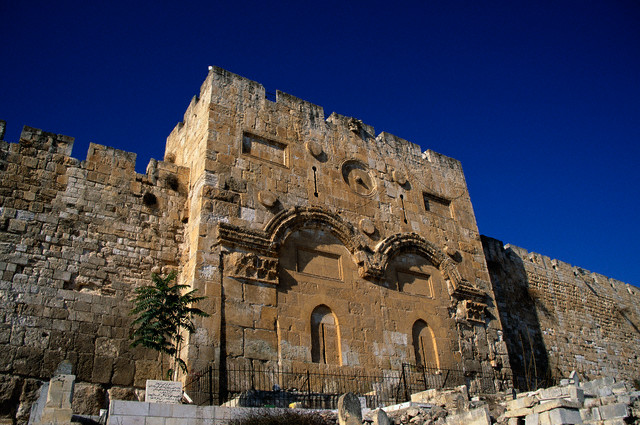
The Golden Gate of the Temple Mount at present time.

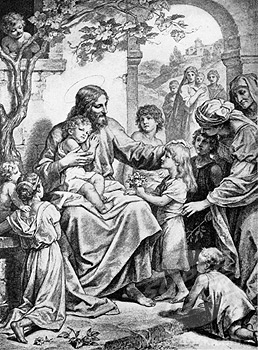
In the ancient world, the youngest child of the family, also called “the least,” received the brunt of all domestic menial work, at a certain point of his life. He was virtually the family servant. He was the one Jesus alluded to when He one day jumped in the middle of an argument among His disciples to settle “who would be the greatest” (Luke 9:46):

Exactostock/SuperStock
“Jesus knowing their thoughts, took a little child and had him stand beside him. Then he said to them, ‘Whoever welcomes this little child in my name welcomes me; and whoever welcomes me welcomes the one who sent me. For he who is least among you all—he is the greatest” (verses 47 to 48).

The message of the “greatest least” became a recurring theme throughout His three-year ministry, telling and showing all Israel that, “If anyone wants to be first, he must be the very last, and the servant of all” (Mark 9:35); and, “…whoever wants to become great among you must be your servant, and whoever wants to be first must be slave of all. For even the Son of Man did not come to be served, but to serve, and to give his life as a ransom for many” (Mark 10:43 to 45).

And the life of a least did His earthly ancestor live his young days, a shepherd of the flocks of his father Jesse (1 Samuel 16:11) until a simple chore brought him to the right place at the right time.

The Bridgeman Art Library/Gettyimages
“Now Jesse said to his son David, ‘Take this ephah of roasted grain and these ten loaves of bread for your brothers and hurry to their camp. Take along these ten cheeses to the commander of their unit. See how your brothers are and bring back some assurance from them.’ Early in the morning David left the flock with a shepherd, loaded up and set out, as Jesse had directed” (1 Samuel 17:17 to 18, 20).

It was the last errand he would ever make. On that day, he singlehandedly shuts the mouth of the Philistine champion permanently and captures the awe of every Israelite, from King Saul to the singing women who celebrated “his tens of thousands” slain (18:7 and 8).

David was introduced into Saul’s life as a servant. He was Saul’s private harpist who performed a very unique form of exorcism by playing his harp (16:18, 23). And it pleased Saul to have him in his court:

Bettmann/CORBIS
“David came to Saul and entered his service. Saul liked him very much, and David became one of his armor bearers. Then Saul sent word to Jesse, saying, “Allow David to remain in my service, for I am pleased with him” (verses 21 to 22).

Saul’s fondness for David would not last, however. Of all Saul’s servants whom he afforded a measure of respect, David was the most loved, the most feared, and the most abused. Shortly after David shot to fame, his popularity galled the king who at once “kept a jealous eye on David” (18:9). With the Spirit of God gone from his life, “an evil spirit from God came forcefully” (verse 10) and possessed him to draw his spear and twice attempt to “pin David to the wall” (verse 11). The twelfth verse explains how fearful Saul grew of David that he promoted him from harp player into a commander over a thousand men who victoriously led the troops in their campaigns (verses 13 and 14) “because the Lord was with him.” For this, there was nothing heard in Israel but David’s fame, and Saul, who wanted nothing more but the adoration of all Israel to ensure his and his posterity’s position on the throne, drove him in an insanity that bordered between the bitterness and fear of his former harpist. His attempts to extinguish the kingdom-wide craze called David went from spearing the boy twice in the privacy of his royal home to putting him in the lead of a thousand-man troop in hopes of getting him killed in battle with the Philistines (verse 17). Saul even went to absurd lengths in deceiving David by maneuvering him “to take revenge on his enemies” (verse 25) and bring back “a hundred Philistine foreskins” (verse 25). David the Circumciser? But even in this seemingly ludicrous quest, “the Lord was with David” (verse 28) and granted him “with more success than the rest of Saul’s officers, and his name became well known” (verse 30).

SuperStock/Gettyimages
Because of David, there were those who would suffer and die. While the Lord covered him in the shelter of His wings during the time when Saul obsessively lusted after his life and pursued him across the Israelite landscape, the little town of Nob would get wiped out in one of Saul’s temper tantrums because he insularly suspected that this humble settlement of priests had set its loyalty on David and not reveal his whereabouts (22:11 to 16). In this episode, the instigator was another servant by the name of Doeg, an Edomite.

Charles & Josette Lenars/CORBIS

Now, if you’ve read Chapter 21, you would probably remember an Edomite by the name of Doeg, who may strike some of us as a weasel, cowardly and shady. He was King Saul’s “head shepherd” (v. 7). It seems that in this chapter, Doeg was given special mention with a standalone paragraph of a verse dedicated to him and what he was doing in Nob:

“Now one of Saul’s servants was there that day, detained before the Lord; he was Doeg the Edomite, Saul’s head shepherd.”

A number of foreigners living in Israel, specifically in royal service, have been mentioned in the Bible; and they have been noted for godly things. Uriah the Hittite in 2 Samuel 11, Bathsheba’s original husband, was among these foreigners whose name has been highly held in the Scriptures. As for Doeg, the Edomite, 1 Samuel 21:7 says that he was “detained before the Lord” the day David visited Nob. What a royal herdsman was “detained before the Lord” at Nob for is yet unclear to us. We can speculate, however, that this foreigner was undergoing ceremonial cleansing proceedings prescribed for aliens living among Law-abiding Israelites. Yet there is a more pressing fact relating to his detention with Nob bearing a massive significance.

Photodisc/Gettyimages
Nob was a levitical city. A city of priests. In Numbers 35, God commanded Moses and the children of Israel to provide cities for Levites where they can live in along with a common land around those cities, “a thousand cubits all around” the city wall (vv. 4–5), that they could raise their livestock. In verse 6, God prescribed six of these towns and cities to be for the purpose of local asylum: “to which a person who has killed someone may flee.” In verse 15, however, God purposed these six points to be “for Israelites, aliens, and any other people living among them, so that anyone who has killed another accidentally can flee there.”

When the time came for the Israelites to appoint the levitical cities of refuge, Nob was not one of them. Joshua 21:17 to 18 enumerates its neighbors—Gibeon, Giba, Anathoth, and Almon—being cities of refuge. But in Numbers 35:6, God also expressed to “give” the Levites “forty-two other towns,” for their herds. It could be that throughout the years, Nob had become an additional satellite refuge of any of the original four mentioned.

SuperStock/Gettyimages
It might also be that Doeg had killed somebody and was seeking asylum in Nob. For such reason, he was “detained.” And while Doeg stayed in Nob, he had the opportunity to witness the entrance of David into the city, speak to the priest Ahimelech, and ask for assistance. Doeg observes how Ahimelech takes the consecrated bread used in holy ceremonies (verses 4–6) and give it to David for consumption; and sees the sword of the Philistine giant Goliath pass into the hands of the young warrior as well (verse 9). Doeg must have thought, “If this were not assistance, I don’t know what is!”

How he found his way into the king’s service is as unclear in the passages as how he coincidentally appeared in Nob at the time David arrived there. It can be assumed that Doeg was carried off as part of the plunder in one of Saul’s operations against Edom, as the one sparsely mentioned in 1 Samuel 14:47, which occurred at the beginning of Saul’s campaign against all of Israel’s “enemies on every side.”

After some days later, Doeg springs out of Nob and is found in King Saul’s presence in chapter 22 verse 9, and successfully raises royal tantrum to a frightening level with his report: “I saw the son of Jesse come to Ahimelech son of Ahitub at Nob. Ahimelech inquired of the Lord for him; he also gave him provisions and the sword of Goliath the Philistine” (verses 9 and 10).

Immediately the king sends for Ahimelech “and his father’s whole family, who were priests at Nob” (verse 11). The last clause, “who were priests at Nob,” is included for a purpose because King Saul orders these people hacked to death in front of him, hacked to death by none other than by the hand of Doeg the squealer. Then the unthinkable takes place:

“Then the king ordered the guards at his side: ‘Turn and kill the priests of the Lord, because they too have sided with David. They knew he was fleeing, yet they did not tell me.’ But the king’s officials were not willing to raise a hand to strike the priests of the Lord. Then the king ordered Doeg, ‘You turn and strike down the priests’” (verse 17 to 18).

In the passage that follows, this idiot did what no Israelite soldier would do. Doeg was an Edomite, a foreign fool who harbored no hesitation in butchering that day all the “eighty-five men” of Ahimelech’s household, including Ahimelech himself.

And as if that were not enough, the paragraph includes the nineteenth verse stating how Doeg in his lonesome, fueled with his berserker’s bloodlust, penetrated deeper into Nob and slaughtered the entire populace—“men and women, its children and infants, and its cattle, donkeys, and sheep”! It comes to show a tradition of rage flowing from the highest point of authority—the king—down to the scum feeding on the soles of royal hierarchy. Though the Israelite guards knew better and did nothing to accomplish the king’s order and lay a strike down the priests of the Lord because of their love for their Israelite way of life, it was no surprise that Doeg the Edomite, who had no regard for and hated Israelite way of life, made good the command.

There is a significant note we need to see here regarding the fulfillment of God’s judgment which He pronounced against the house of Eli, the judge and high priest who raised the boy Samuel in Tabernacle service. A part of the prophecy held that God would “cut short [Eli’s] strength and the strength of [his] father’s house, so that there will not be an old man in [his] family line” (1 Samuel 2:31). The judgment stated:

“Although good will be done to Israel, in your family line there will never be an old man. Everyone of you that I do not cut off from my altar will be spared only to blind your eyes with tears and to grive your heart, and all your descendants will die in the prime of life” (verses 32 to 33).

Ahimelech was a descendant of Eli. His son was Abiathar, Nob’s sole survivor, who “escaped and fled to join David” (1 Samuel 22:20). He successfully caught up with David and reported the massacre. This man went on serve David as high priest (1 Samuel  23:6, 9 to 12), even sharing the position with Zadok (2 Samuel 8:17). Through thick and thin with David Abiathar was faithful (2 Samuel 15:24 to 29). He even went daringly undercover for David during Absalom’s usurpation (2 Samuel 15:34 to 36). His end, however, did not come as pleasant. At the end of David’s reign, he shifted alliances to a usurping prince named Adonijah (1 Kings 1:7,9). But the hand of God was upon another prince, Solomon, who immediately deposes him (1 Kings 2:26, 27, 35), thus ultimately ending Eli’s influence in the priesthood.

But God will not forget Ahimelech. In verse 20, a son of this brave priest named Abiathar, And when he had successfully caught up with this king, Abiathar reported of the massacre. What is more heartbreaking, however, is in verse 22 wherein David said, “That day, when Doeg the Edomite was there, I knew he would be sure to tell Saul. I am responsible for the death of your father’s whole family.” Photo credit: American Colony Photographers/National Geographic Society/Corbis

We cannot help but feel sorry for Abimelech. As readers of a different time and cultures, we view his death as something that had happened needlessly, a result of the senseless rage and paranoia of a demon-minded king. We cannot help but lament for this Old Testament martyr who could have been saved should have David prayed and sought the Lord’s instruction and not merely relied on his own wisdom. But on the other hand, we need to realize that at this point of David’s life, he had nothing but the hand of God as his only guide and shield. Even in his life as a fugitive, the statement in 1 Samuel 18:14 rang true, that, “In everything he did he had great success, because the Lord was with him.” And by the very hand of God, he was led into Nob, not only to be aided, but to be ceremonially consecrated and confirmed as the next king of Israel whose house would “endure forever” (2 Samuel 7:15). What happened in Nob was Abimelech, Eli’s descendant, fed the consecrated bread to David, who in his insistence gave this interesting argument:

“Indeed women have been kept from us, as usual whenever I set out. The men’s things are holy even on missions that are not holy. How much more so today!”

The handing of the consecrated bread over to David from the priest was symbolic of the dismantling of the high priesthood and its surrender to David who represented the real High Priest, soon to emerge from his lineage as God would promise as soon as he assumed kingship:


Marc Garanger/CORBIS
“The Lord declares to you that the Lord himself will establish a house for you: When your days are over and you rest with your fathers, I will raise up your offspring to succeed you, who will come from your own body, and I will establish his kingdom. He is the one who will build a house for my Name, and I will establish the throne of his kingdom forever. I will be his father, and he will be my son. When he does wrong, I will punish him with the rod of men, with floggings inflicted by men. But my love will never be taken away from him, as I took it away from Saul, whom I removed from before you”(2 Samuel 7:11 to 15).

Soon after the consecrated bread was given to David, Abimelech handed David Goliath’s sword, the symbol of David’s greatest victory and Israel’s popular approval of his ascent to national leadership. The house of Eli would faithfully assist David throughout his reign until the end (1 Kings 2:26 to 27).

Then the Prophet Samuel died, and while all Israel mourned for him, Saul mourned for himself. For all his life, he depended on the counsel of this great judge and now that Samuel was dead, the only channel of God’s guidance in his life was cut off (1 Samuel 28:6). For a while he was relatively calm about it but when he caught the sight of the Philistine army assembled at Shunem, he lost all hope of salvation. Thoughts began to run through his mind, and then…

Corbis
“Saul then said to his attendants, ‘Find me a woman who is a medium, so I may go and inquire of her” (verse 7).

There is something we can note from these “attendants.” In 16:15 and 16, they knew exactly what was bothering Saul, they knew exactly what he needed, they knew exactly who to help him, and they knew exactly were to find him. Israelite Facebook, I’d say! Now…

“’There is one in Endor,’ they said” (Ibid.).

Ka-ching! Like I said….

We have studied a lot about that night in Endor—and will study more about it! But what we need to see at this time was the protection Saul gave to the witch who held the door of his fate wider to destruction. Instead of executing sentence to this witch whose trade was outlawed by the Law of Moses, he proposed absolution:

“Saul swore to her by the Lord, ‘As surely as the Lord lives, you will not be punished for this” (1 Samuel 28:10).

At the end of the traumatic séance, Saul made good his promise; and the witch, who now owed her life to her royal client, offered him a little piece of advice: “eat” something (verse 22). Saul listened to the witch.

“He got up from the ground and sat on the couch. The woman had a fattened calf at the house, which she butchered at once. She took some flour, kneaded it and baked bread without yeast. Then she set it before Saul and his men, and they ate. That same night they got up and left” (verse 23 to 25).

The next day, Saul was with a different type of servants: his soldiers, the ones who would not comply with his wishes at all times. And even in defeat and him in the face of death, defiance would yet get the better of his armor-bearer when he was told to run his king through the blade (31:4).

Bettmann/CORBIS
“But his armor-bearer was terrified and would not do it; so Saul took his own sword and fell on it. When the armor-bearer saw that Saul was dead, he too fell on his sword and died with him” (verse 4 and 5).

The soldiers of Saul killed many in their lives, but none in the Scriptures is found that their blades were stained by the blood of their fellow countryman. The armor-bearer chose to stain his blade with his own blood over the guilt of murdering his master.

That was the end of the armor-bearer along with Saul’s three sons, but not Saul. In the first chapter of 2 Samuel, a figure of tattered clothes and with dust on his head came running to David’s camp in Ziklag. He explained that he had “escaped from the Israelite camp” (verse 3), apparently an aide of Saul or one of his soldiers. When asked of his background, the aide explained:


Alessandra Bennedetti/Corbis
“’I am the son of an alien, an Amalekite,’ he answered” (verse 13).

From the very race God ordered wiped out. The death of Saul had finally given testimony of his disobedience.

[More.]