A
CCORDING TO SOME MODERN ZOROASTRIAN ACCOUNTS, the original Magi occupied ancient Bactria. Some experts assert that it was in this country where the first Zarathustra found refuge when he was banished from of his own tribe. It was here where his philosophy blossomed into a greater way of life complete with a caste of brilliant priests—our Magi, similar to the Israelite tribe of Levi who were designated to serve God as His priests and religious attendants. It was a lineage made up of Zarathustra’s best handpicked disciples, and from this he chose some to be itinerant teachers to scour the Near East for the purpose of drawing converts. The invasion of Alexander the Great in 330
B.C. shattered the Magi’s ancient lineage. From then on, the exclusivity of the title Magus was corrupted as non-Zoroastrian priests began donning the label for themselves even as Alexander declared himself the “Great King” in Medo-Persian tradition when he was Greek. Or rather Macedonian, whom the Greeks scorned as semi-barbaric.
►
Bactria
The standard understanding, however, has been that it was in Bactria where Zoroastrianism gathered its greatest adherents after the death of Zarathustra. Not much is truly known of Bactria; among those in record is that it became an independent kingdom in the third century
B.C., came under the power of the Medes then became a satrapy of Cyrus the Great about 540
B.C. Its wide and bustling highways of commerce and trade provided for the Persian Empire immeasurable wealth in gold revenue and goods from the most exotic regions of its distant borders. It was also through these great Bactrian highways that the Zoroastrian religion was introduced to every part of the Empire and later into the West, as far as Rome. By the time of Cyrus the Great, it was said that Bactria was already the main hub of Zoroastrianism since around the seventh century. And as significantly, it along one of these highways that led the Zoroastrian Magi to Palestine, bearing gifts of gold, frankincense, and myrrh, seeking the One called King of the Jews.
 |
| Photo: Baldur's Gate ©Wizards of the Coast |
But what the Jews, and some of us Christians today, never expected and, to this day, have never understood—beyond the sovereign choice of God, is this: God was with the Magi, whether they knew it or not.
The Biblical account is literally clear that the Magi were in search of a “king,” a hero understandably human, who, like the Jews believed, would lift his people out of oppression and into a national state of deliverance and prosperity. It may have not been too remote for the Wise Men to have interpreted such a king in the same way as the Jews did in that aside from having knowledge of the Hebrew Scriptures, their religion, Zoroastrianism, also held the belief in a messiah who would be born into this world and prepare it for the end.
Whatever the Magi or the Jews expected, there's some certainty, they were expecting the heroic type, like this one on the right. And there is some certainty that nobody expected the one below.▼
 |
| © Philippe Lissac/Corbis |
The Zoroastrian culture was established by its prophet Zoroaster, or Zarathustra, who was a culture-bearer of sorts, believed to have arrived to his people and offered the innovation of agriculture. Historically, he was said to have initiated the Neolithic revolution that ensured the greater survival of his people. And to bring to life greater ideals of prosperity and life, he was believed to return in nine thousand years and bring a new age to mankind. Then in the sixth or seventh century
B.C., another individual bearing the name Zarathustra did appear establishing religious reforms, which to some people were corruptions to the original Zoroastrian doctrine. Nevertheless, these reforms were accepted and a new Zoroastrianism was instituted under the new rule of the Persians when they successfully wrested supremacy from the Medes.
 |
| © National Geographic/SuperStock |
►
Parthia
By the time of Jesus’ birth, the great seventh-century-
B.C. power of the Medo-Persians had been massively reduced into the much inferior Parthian Empire whose expansionistic wave was decisively walled out at the borders of Palestine and Syria, which by this time was owned by a new world power—Rome, and everyone who was either under the power of Rome or stood in the way of its imperial quest groaned in the jaws of this monster’s ruthless oppression. How rife was the time for a hero to emerge and save the world from brutal tyranny. The good news was that contained in the Jewish and Persian tradition was the hope of such a champion to come; the better news was that the Persian Magi had learned of the exact date when this champion was to be born.
 |
| Source: antiquitatis.com |
Parthia was a part of the former Persian and Greek empires which Rome largely never got to touch. In the early days of its rise to power, the Imperial Eagle sent its legions into the region to either push back its enemies advancing from the orient or to pressure rival forces to capitulate. Noted of these campaigns were the ones by the Trajan where he was able to inflict several severe defeats upon the Parthians and capture from them several provinces. But that was during his reign between 98 and 117
A.D., by the second century, which by that time the Parthian Empire was on the decline. In the first century
A.D., however, Parthia was Rome’s major pain in the neck on the eastern front as it maintained and expressed its defiant sovereignty by ruthlessly decimating any Latin force plunging into their sandy territory. An example of their fury is told when they poured molten gold down the throat of the notorious Roman financier and politician Marcus Licinius Crassus after the attacking Roman force he was with fell int middle of the desperation of the times, echoes of a Promised Deliverer come reverberating from land nearby and the Persians realize that they are not alone in their hope. The Hebrews, a people Cyrus inherited out of his conquest over the Babylonians, were likewise awaiting for One foretold by prophets of old who would overthrow Roman oppression and establish His everlasting kingdom where there will be peace, where—
 |
| © Brooklyn Museum/Corbis |
“The wolf will live with the lamb, the leopard will lie down with the goat, the calf and the lion and the yearling together; and a little child will lead them” (Isaiah 11:6);
where “the cow will feed with the bear, their young will lied down together, and the lion will eat straw like the ox” (verse 7); where
“the infant will play near the hole of the cobra, and the young child put his hand into the viper’s nest” (verse 8); where all beings
“will neither harm nor destroy on all [His]
holy mountain, for the earth will be full of the knowledge of the Lord as the waters cover the sea” (verse 9).
 |
| © Paul Almassy/CORBIS |
The Persians understood this for their Magian religion taught of a clear belief in a future life. They believed that in the end, the forces of good would be rallied behind a messiah to overcome evil and iron out a world free of Ahriman, the god of darkness. The last great day would come when the souls of the dead would be judged according to their deeds and Paradise be made available for those whose lives be found justified.
 |
| © Ken Scicluna/JAI/Corbis |
Seven hundred years after the last Zarathustra had made his visit and brought the Persian culture to the summit of world dominance, another one like him from out of the remnants of the Old Persian Empire was about to arise, whose star the Zoroastrian Magi had charted from the time they stormed and took over the temples of Babylon. Both Jew and Persian braved the oppression of the times, strengthened by the hope of a hero to come. With the advantage of the Hebrew Scriptures, the Zoroastrian priestly writings called the Zendavesta, and the Magian knowledge of astrology, the Magi’s expectation became enhanced with a precise calculation as to when the Messiah would come. And when the date fell,
“they saw the child with his mother Mary, and they bowed down and worshiped him” (Matthew 2:11).
This worship, this act of allegiance, some historians believe, was a decision to show that the priests of Zarathustra had recognized Him, accepted Him, as the hero whom they awaited [Stewart C. Easton,
The Heritage of the Past (New York: Holt, Rinehart and Winston, 1961); p.105].
After the account of the birth of Jesus the Magi disappear from the pages of the Bible. Not, however, without representation from two New Testament figures who virtually depicted the dualism of light and darkness espoused by the Magian religion.
 |
| © Dr. John C. Trever, Ph.D/Corbis |
In the time of Jesus, Judaism was already bordered within by sects, dominant among which were the Pharisaic, or Rabbinic, and the Sadducaic. Yet there was also another one more reclusive, more fundamental, and surprisingly, more Magian. They situated themselves in the desert wilderness of the Judean region, away from mainstream urban and rustic settlements where the major Jewish denominations have established their bastions. In Greek, they were called
hosios for their discipline and dedication to holiness; yet in a name still shrouded in mystery to this day, this sect was known as the Essenes, famous to our generation for authoring the so-called Dead Sea Scrolls discovered in 1947.
Their strict observance to Law made the Essenes principally similar in character to the Pharisees, except for the part where the latter was cited for their long
“flowing robes” in which they love to walk around in the marketplaces and be greeted by the inconvenienced crowd (Luke 20:46). While the stoles of the Pharisees were winning them
“important seats in the synagogues and the places of honor in the banquets” (verse 47), simple white garments identified the Essenes in their unsophisticated lifestyle of habitually eating the plainest food, self-support by manual labor, and sharing communal wealth and property in a world where there was neither rich nor poor but where everyone rejoiced in having everything they basically needed.
◄ © American Colony Photographers/National Geographic Society/Corbis
 |
| Source: theesseneway.net |
Manifest likenesses to the Pharisaic and the Christian sects have been drawn of the Essenes since the modern world caught notice of these peculiar people who shook the foundations of contemporary Christianity as well as Judaism. And it has been as far suggested by some writers that Christianity was an outgrowth of Essenism even though the strict foundational legalism of the Essenes diametrically contrasts Christianity’s emphasis on salvation by grace. Never, however, has there been any implication—or has it ever been a popular food for thought—that standing evidences also assert shreds of Magian Zoroastrian influence might have somehow secured an important part of the Essene doctrine.
 |
| © Richard T. Nowitz/CORBIS |
 |
| Source: blackplanet.com |
Though historical records at best trace the Essenes’ origin from the second century
B.C., its members claim their beginnings back to Adam’s seventh son Enoch (Genesis 4:17–18), the first of two celebrated personalities in the Bible who was taken into heaven without traversing death. As accounts have it, it was from the powerful Jewish political party called the Hasideans where the nucleus of the first Essene membership emerged [Max I. Dimont,
Jews, God and History (New York: Mentor, 1994); p.92]. Losing their taste for politics, they withdrew into an isolated existence of religious observance, but that was after they have realized what had become of their group which at the beginning simply sought to keep alive the fire of faithfulness to the Mosaic Law and the restoration of the Davidic kings. Never had they envisioned the massive Jewish following in their midst awaiting leadership that would stand against the Hellenization of Israel. They were a spark that launched the Jewish national anti-Hellenization movement leading to the Maccabean revolt in 167
B.C. The flame which they ignited however was carried out by the separatist Pharisees, another Hasidean faction that would not agree with the isolationist sentiments of the Essenes. In the period following the failure of the Maccabean revolt, some historians assert that John Hyrcanus (135–105
B.C.), son of the last surviving brother of the great Judas Maccabeus, issued oppressive measures against the Essenes, particularly to persecute the latter’s very respected Teacher of Righteousness for the mere reason of a rebuke which the Teacher gave to Hyrcanus for switching party affiliation to the Sadducees, the sect that supported Israel’s Hellenization. The harassment which Hyrcanus initiated against the Teacher of Righteousness continued in the reign of his successor Alexander Jannaeus (103–76
B.C.), forcing the Teacher to flee to region of Damascus where the Syrians were engaged in an offensive against Jannaeus (
Genesis of Eden http://www.dhushara.com/book/yeshua/apoc.htm). Here we see the striking, almost supernatural, resemblance of events between the Essene master fleeing to Syria and Zarathustra retreating to Bactria. But while the flight of Zarathustra account is largely debatable to this day, the story of about the Essene Teacher of Righteousness surprisingly turns out historically factual as discovered in the 1947 unearthing of the Dead Sea Scrolls.
 |
| Source: truelovetoo.blogspot.com |
Among the manuscripts dug up by the Qumran scientific team was one entitled
The War of the Sons of Light with the Sons of Darkness, the document that made experts decide that it was the Essenes who had established Christianity around two hundred years before Jesus lived. This is the account where the Teacher of Righteousness makes his appearance, a man whose life not only reflects Zarathustra but Jesus as well. According to the ancient writings, the Teacher was considered as a divinely sent Messiah who violently died in the hands of the Sons of Darkness. The Essenes, being disciples of this Teacher, called themselves the Elect of God and their doctrine the New Covenant. This set of facts alone was all Sorbonne Professor A. Dupont-Sommer needed to attribute the foundation of Christianity to the Essene tradition, as he stated in his study entitled,
The Dead Sea Scrolls: A Preliminary Survey. Then a more in-depth examination of this religion further showed that the Essenes called their chief priest the “Anointed One,” same as St. Paul and his Christian disciples called Jesus; and ordinary priests whose role may have been similar to that of the Old Testament Levites were referred to as the “sons of Aaron.” This piece of information, however, did not nullify the existence of a particular Teacher of Righteousness who, like Jesus, preached humility, love for one’s neighbor, and obedience to the Law of Moses before dying a violent death between 65 to 53
B.C. Like Jesus, the Essene Teacher was the subject of religious hate particularly from the party of the Sadducees, which as we have seen in brief composed the political force which John Hyrcanus switched to after being sharply rebuked by the Teacher.
 |
| © Dr. John C. Trever, Ph. D./Corbis |
Other manuscripts discovered along with
The War of the Sons of Light with the Sons of Darkness are the monumental scrolls of the Prophet Isaiah which may be the originals of his entire book which has been canonized in the Bible. It was the foundation of their conviction from their early anti-Hellenistic days that attracted an entire nation into a sentiment expressed by a great prophet who envisioned the final hours of the very Lamb of God. The impact of the message found in Isaiah 53 never seemed to have gotten into the minds of the people until God supernaturally allowed it to be practically lived out by the Teacher of Righteousness as a sample of what the Jews could expect once His true Messiah would finally be enfleshed. Now imagine the shock of this devout Jewish sect when they came to discover how a Persian prophet by the name of Zoroaster likewise lived through the same exact ordeal of persecution and rejection from his very own people centuries before the time of the Teacher of Righteousness. There was a trend occurring which may have been divinely strung as the times marched closer to the Messiah’s arrival.
 |
| © Hanan Isachar/CORBIS |
To the Israelites, heaven meant Canaan, the Land of God’s Promise. Although they understood that there was an actual heaven, it was, to them, God’s throne (Isaiah 66:1); Israel was the heaven He had given to His people. Israel in its heavenly context would be the capital of earth’s prosperity and contentment, living up to its description as the “land flowing with milk and honey” (Exodus 3:8,17; 13:5; 33:3; Leviticus 20:24; Numbers 13:27, 14:8, 16:13–14; Deuteronomy 6:3, 11:9, 26:9, 15; 27:3; 31:20; Joshua 5:6; etc.). If there was any hell, it was the condition of being cast away from the Land or the hopelessness of not having to return to the Land forever. The Northern Kingdom of Israel was said to have descended into the grave, or hell, from the time it was devastated, its people deported into Assyria, and swept into extinction when its conqueror fell into defeat. The Southern Kingdom of Judah, however, was, as sung by King David, saved from the cords of death (Psalm 116:3–4) when they found hope in the land of Babylon. Ultimately consummating God’s deliverance was one He had already chosen before the time Judah was sent into exile—Cyrus the Great:
“who says of Cyrus, ‘He is my shepherd and will accomplish all that I please; he will say of Jerusalem, “Let it be rebuilt,” and of the temple, “Let its foundations be laid”’” (Isaiah 44:28).
 |
| Source: deebrestin.com |
Cyrus the Great, in his act of sending the Jews back home, became a picture of the One True Messiah—Jesus Christ—in His purpose to bring deliverance to those He loves and those who love Him. It can be said that Cyrus the Great was the symbolic messiah to remind the new generation of Israelites, now called Jews, that there was going to be a Messiah to come, greater than the Persian monarch who would not begin to measure up to carry the thongs of His sandals. Yet what could be a coincidence or a prophetic marker in Cyrus’ culture was Zarathustra, the messianic aspect of the Persian religion identical to that of the Jews’. This, along with the Jews’ respect for Cyrus the Great, may have been a converging point that may explain the Zoroastrian complexion of the Essene ethos.
The choice of white garments worn by the Essenes may trace its origin from the Magian tradition that identifies the pure color to the righteousness of Ahura-Mazda, the god of light. The Essenes believed in a world equally polarized by the opposing forces of good and evil, as very well stated in the title of their document,
The War of the Sons of Light with the Sons of Darkness, reflective of the distinctive Magian theology of Dualism. Another document written under the scope of dualism as applied to the political trend of its time was the
Habakkuk Commentary. It was said to have been authored around 41
B.C. explaining how the rising tide of Rome represented the oppressive power of Darkness.
 |
| Source: mishkanministries.org |
Magian theology has been able to contribute considerably to Essene thought like the belief in Hell and with it a modification of the original Jewish doctrine of Heaven; a future resurrection of the dead to face judgment; a shaping of an Essene version of Ahriman the Persian god of darkness in the form of Belial. Because of Dualism, the impression that evil was co-equal in power and strength to the force of good pervaded in religious consciousness. But let it also be understood: the Magian influence did not only affect the Essenes in that even the Pharisees and the Sadducees chose to rethink select aspects of their doctrines and accommodate some Magian judgments that came as sound and principally enhancing. Perhaps one of the attractions which drew the Jewish attention to the Zoroastrian philosophy was a number similarities possessed by the latter to the first one. An example was the seven-branched golden lampstand which God ordered lit
“before the Lord from evening till morning” (Exodus 27:21). In Zoroastrian interpretation, this fire which continually burned in the Temple of the Lord was a symbol of the light of all goodness and purity that their god Ahura-Mazda stood for. Later down the centuries to the time of Jesus, the emblem of fire would grow in popularity as a Zoroastrian sect called Mithraism draws the faith of those from both near and distant lands of the Roman world. The problem with the harmonization of alien additions into the Jewish faith was that it did more to clutter and cloud the main understanding of what the Laws of God simply intended to convey. Jesus later referred to these supplements as the
“yeast of the Pharisees and the Sadducees” (Matthew 16:6,11–12; Mark 8:15; Luke 12:1).
 |
© Chris Hellier/CORBIS |
Jesus was troubled by the corruption of the basics of Jewish faith that in His debates with the experts of the Law in His land, readers will frequently note how He brought the issue back to its foundation as if He was re-educating them on the heart of matter, cutting through the confusion of the
“yeast” which spiritual Israel had welcomed from its time in Babylon and then with its friendship with the Persians. During Jesus’ time, religious teachers were too immersed in doing good by obeying the letter of the Law without having, however, a firm idea why God really wanted His people’s obedience. In His teaching regarding hating and forgiving one’s neighbor, Jesus cites a regulation imposed by the Sanhedrin:
“…anyone who says to his brother, ‘Raca,’ is answerable to the Sanhedrin” (Matthew 5:22).
Raca is a word used to utterly vilify an individual, calling him “worthless.” Notice that in the next verse the word is no different from
“you fool,” the slur which Jesus cited would bring anyone in danger of the fires of hell (verse 23). What Jesus was saying was that any one word an individual uses to curse his brother will immediately reserve him a seat in that dreaded place of eternal darkness, worms, and boiling excrement, no matter what the Sanhedrin and its fancy alien-inspired laws stipulate.
 |
| © Ken Welsh/*/Design Pics/Corbis |
In His exposition on adultery, Jesus makes it very elementary. The interpretation of the law,
“Do not commit adultery” (Matthew 5:27, Exodus 20:13) had been shredded into a multitude of commentaries that the basic attitude of God for the matter has been forgotten. Jesus, however, makes it very simple:
“…anyone who looks at a woman lustfully has already committed adultery with her in his heart” (Matthew 5:28).
“Define ‘lustfully.’” That’s the condescending attitude one would get from an expert of the Law in the time of Jesus who had learned to “analyze” and “philosophize” and “sift through the possibilities where exceptions may or may not be applied.” The general mindset one educated in the scrolls of Babylonia and Persia was enveloped in the single word, “Objectivity.” Well, Jesus expressed just the opposite. God was not “Objective” about anything when He carved out the Ten Commandments twice on Moses’ stone tablets. When He stipulated,
“Do not commit adultery,” it was because He hated adultery—and divorce, by the way (Malachi 2:16); when He expressed,
“You shall have no other gods before me” (Exodus 20:3) and
“You shall not make for yourself an idol in the form of anything…[nor]
bow down to them or worship them” (verses 4–5), it was because He was
“a jealous God” (Ibid.). Now where’s the Objectivity there? God established laws because He is One
“punishing the children for the sin of the fathers to the third and fourth generation of those who hate me, but showing love to thousands who love me and keep my commandments” (verse 5–6).
 |
| © Brooklyn Museum/Corbis |
And it was the years of cross-referencing the Holy Scriptures with neighboring doctrines of belief from the years after 586
B.C. to 26
B.C. that had contaminated “expert” interpretation and subsequent obedience to the Law of God. It was then up to Jesus to bring the Law and the Prophets into completion:
“Do not think that I have come to abolish the Law or the Prophets; I have not come to abolish them, but to fulfill them” (Matthew 5:17).
 |
| © Blue Lantern Studio/Corbis |
As we focus a little longer on this verse we can come to a conclusion that the original interpretation of the Scriptures taught by Moses and held until the fall of Judah in 586
B.C. was no longer the foundation of how Jesus’ generation understood the Law. We can furthermore expect that the obscuration caused by addition of the Magian and other possible foreign trappings had rendered the original basics alien to the Jews. Jesus’ engagement with the Sadducees regarding a soul’s marriage at the resurrection, for example, showed how estranged these experts had become to generate such a question like,
“…at the resurrection, whose wife will [a woman]
be of the seven [brothers],
since all of them were married to her” (Matthew 22:27)? The response Jesus gave was not even considered to be called a rebuttal:
“You are in error because you do not know the Scriptures or the power of God. At the resurrection people will neither marry nor be given in marriage; they will be like the angels in heaven. But about the resurrection of the dead—have you not read what God said to you, ‘I am the God of Abraham, the God of Isaac, and the God of Jacob’? He is not the God of the dead but of the living” (verse 29–32).
 |
| Source: kansastypewriter.wordpress.com |
Interpretation: “Dudes, y’all missed the bridge by a hun’rid miles!” And if we may add: “Where y’all been?” Imagine the Sadducees, who did not believe in heaven, hell, or any resurrection of the dead, engaging Jesus in matters of the afterlife! Come on!—that is, unless they were propelled by the intention to promote Jesus as a Master of the Scriptures by making themselves look stupid! Though the Sadducees held a conservative understanding of the Scriptures, they were not unfamiliar to the popular teachings of their times espoused by the Pharisees, the Essenes, and other competing Jewish sects that were sprinkled with popular Magian hallmarks.
 |
| © Gideon Mendel/Corbis |
It has been a popular assertion that Jesus was an Essene partly because of the number of statements He made in the Bible that can be directly traced to the Essene tradition. One such statement allegedly made was in Matthew 5 where He spoke about
“the light of the world” (verse 14). It seems that such writers once detecting the word
“light” were just too quick to refer to their Essene records and thus fit Him among the ascetics of the ancient Jewish religious spectrum who wore garments of white and called themselves the Sons of Light. Another giveaway was in His famous Beatitudes where He alluded to the virtue of Essene frugal life:
 |
| © Charles & Josette Lenars/CORBIS |
“Blessed are the poor in spirit for theirs is the kingdom of heaven. Blessed are the meek, for they will inherit the earth. Blessed are those who hunger and thirst for righteousness for they will be filled. Blessed are the merciful, for they will be shown mercy. Blessed are the pure in heart, for they will see God. Blessed are the peacemakers, for they will be called sons of God. Blessed are those who are persecuted because of righteousness, for theirs is the kingdom of heaven” (Matthew 5:3,5–10).
Advocates of an Essene Jesus further assert that He advocated fasting, an activity that the Essenes were primarily devoted to, in that He even recommended it in more difficult cases of demon possession (Matthew 17:21 and Mark 9:29). But if this were so, then why was it asked, in Matthew 9:14, Mark 2:18, Luke 5:33, of His disciples why they never fasted as did those of the Pharisees and those of John? And for this, Jesus replied,
“How can the guests of the bridegroom mourn while he is with them? The time will come when the bridegroom will be taken from them; then they will fast” (Matthew 9:15). The truth of the matter was that Jesus did teach His disciples to fast, to fast inconspicuously, not in the popular way that publicly advertised their moment of self-denial—
 |
| Source: robinhl.com |
“…do not look somber as the hypocrites do, for they disfigure their faces to show men they are fasting” (Matthew 6:16).
Jesus instead recommended looking good and, most of all, normal:
“But when you fast, put oil on your head and wash your face, so that it will not be obvious to men that you are fasting, but only to your Father, who is unseen” (verse 17).
The Essenes were strictly legalistic, like the Pharisees, but not Jesus. In Matthew 12, Jesus’ disciples were once again placed under the spotlight as they passed through the grain fields and began picking and munching on some heads of grain (verse 1). The Pharisees were indignant and cried out,
“Look! Your disciples are doing what is unlawful on the Sabbath” (verse 2). It can be one of two things, Him being an Essene in both cases: that Jesus was an irresponsible Teacher or a rebel to His own culture. His alleged “violations” of the Sabbath did not stop there. In verses 9 to 13, Jesus provoked His accusers to anger by healing a man’s shriveled hand on the same day with this in His defense:
 |
| Source: pastorblog.cumcdebary.org |
“If any of you has a sheep and it falls into a pit on the Sabbath, will you not take hold of it and lift it out? How much more valuable is a man than a sheep! Therefore it is lawful to do good on the Sabbath” (verse 11 to 12).
With a strict Essene, it is doubtful for him to risk violating the regulation of the holy Sabbath. For this, an Essene will miss the point as will any Pharisee or Sadducee.
If Jesus were an Essene, would He delight one bit knowing that the version of the Law by which His society had been formed sports shards of Magian belief? Yet on the other side of the Essene prism, not even the Magi would agree to some of the Essene tenets, like asceticism and excessive fasting.
 |
| © Lebrecht Music & Arts/Corbis |
But perhaps one of the greatest disregards to Scripture made by the advocates of an Essene Jesus is the allegation that He was actually born in Nazareth and not in Bethlehem. Claimants of an Essene Jesus explain that Nazareth was founded as an Essene settlement in the north for which the term “Nazarene” means “Northern Essenes” [Brother Nazariah, D.D.,
“Introduction to the Ancient Essenes and the Modern Essene Church of Christ” (http://www.essene.org/Ancient_Essenes.htm), The Essene Church of Christ, 1998–1999]. Logic follows that the town was a bastion of the Essene culture with a population clothed in the simplest garments of white, living unsophisticated lives, never marrying, and starving because of excessive fasting. We have no arguments to this, except that Jesus was born here. The Bible is clear that His parents, Joseph and Mary, who were by then living in Nazareth, traveled down to Bethlehem, the town of their birth, in compliance to the Roman decree to register for the
“first census” issued by Caesar Augustus (Luke 2:1–2,4). The story in Luke 2:5 continues that on that day, the holy couple were among the most inconvenienced because it was Mary’s most awaited month for Jesus to be born. In the sixth verse, the Expected One chose to be born
“while they were there”—
“there” where? Bethlehem, that’s where. Luke documented the visit of the shepherds on the night of Jesus’ birth but it was Matthew who recorded that after the party of the Magi and local folk had left, an angel of the Lord appeared to Joseph in a dream telling him to spirit Mary and Jesus to Egypt because Herod had gone murderously crazy and issued a search-and-destroy for the One born King of the Jews (Matthew 2:13). On the nineteenth and twentieth verses, the same angel who appeared to Joseph in a dream came once again to tell him that Herod had died and thus was the coast clear for them to return to Israel. It took some years, therefore, for Joseph and Mary to have never set foot in Nazareth, thus Biblically junking the argument that Jesus was born in the northern town. But the debunking of the idea that Jesus was an Essene does not end there.
 |
| Source: http://catholic-resources.org |
The account in Luke 4:14 to 30 tells how the synagogue in Nazareth where he grew up rose furious against Him and drove him to the brow of an outlying hill to hurl him down the cliff (verse 28 to 29). It was after Jesus read on the passage He read in Isaiah 61:1 and 2 and from it taught a strange prophetic sermon about the future of Israel, how the land of God’s Promise would be abandoned by His Spirit in the same way as Elijah was sent to a widow of Zarephath instead of the
“many widows in Israel” in his time. For this, His listeners, who could have been Essenes, became homicidally incensed.
If Jesus were an Essene, this story in Luke would have made Him an ex-Essene, or worse, an anti-Essene. But the word “Essene” never appears in the Bible as do “Pharisees” and “Sadducees” stud the pages of the gospels. Jesus spoke against the latter two parties, calling them
“vipers” (Matthew 12:34, 23:33), yet even though He never mentioned the Essenes, He likewise taught opposite to what they believed. The matter of being the
“light of the world” in Matthew 5:14 was focused to all the Jews, not merely to a particular membership.
 |
| © Danilo Calilung/Corbis |
The teachings of Jesus came from the heart of the Scriptures, that is, the Law and the Prophets. These were principles that determined the common ground of all Jewish sects, from the most politically outspoken to the religiously withdrawn. Not one sect, therefore, could claim ownership of even a fragment of the Scriptures and the truth they contain; and because of this, Jesus liberally drew from them with all the authority of His divine nature and His natural human right as a Jew, at to Him it mattered not whether that which He drew was upheld by the Pharisees or Sadducees or Essenes or whatever sect. Frequently in His teachings, in fact, He was quick to acknowledge the corresponding reward of any good deed. Notice these passages:
“So when you give to the needy, do not announce it with trumpets, as the hypocrites do in the synagogues and on the streets, to be honored by men. I tell you the truth, they have received their reward in full
” (Matthew 6:2).
 |
| Source: praying.kansasbob.com |
“But when you pray, do not be like the hypocrites, for they love to pray standing in the synagogues and on the street corners to be seen by men. I tell you the truth, they have received their reward in full” (6:5).
“
When you fast, do not look somber as the hypocrites do, for they disfigure their faces to show men they are fasting. I tell you the truth, they have received their reward in full” (6:16).
Let us understand that though Jesus obviously spoke against the ways of
“the hypocrites,” He was not about to deny the fact that they were nonetheless in obedience to God albeit in mere form and not by the sincerity of their hearts (Matthew 15:8, Mark 7:6).
 |
| Source: magdelene.wordpress.com |
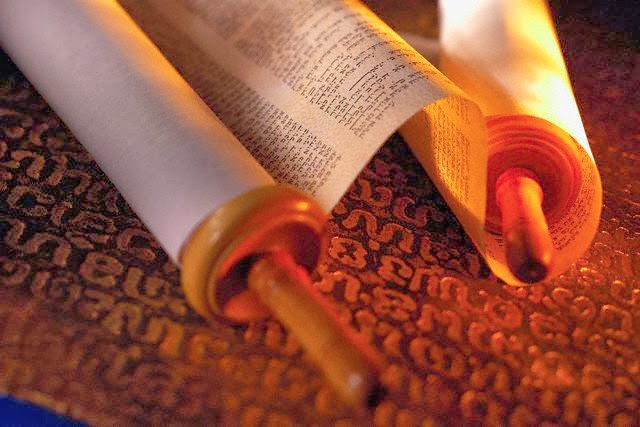
Yet what Salvation might have been if Jesus were an Essene? Would Christian fashion mean wearing white? Would we be living in a tightly knit counterculture of simple living and simple food, awaiting the days to lead all mankind to final judgment? Would we be gathering in synagogues as the Jews still do and listen to one read from a huge scroll covered in an ornate case, with Leviticus our frequent reference to obedience? As we have understood earlier in our study, the Essenes were a legalistic sect and strictly adhered to the letter of the Law, as did the Pharisees. It was then a common point of agreement between both sects that in order to be saved, the Law must be the center of one’s life. If this were the situation, then St. Paul would not have fought against the Judaisers who later tried to infiltrate the Galatian brethren convincing them of the saving power of the Law—
 |
| Source: washingtonpost.com |
“’How is it then that you force Gentiles to follow Jewish customs?’ We who are Jews by birth and not ‘Gentile sinners’ know that a man is not justified by observing the law, but by faith in Jesus Christ. So we, too, have put our faith in Christ Jesus that we may be justified by faith in Christ and not by observing the law, because by observing the law no one will be justified. You foolish Galatians! Who has bewitched you? Before your very eyes Jesus Christ was clearly portrayed as crucified” (Galatians 2:14–16; 3:1).
As we have also seen earlier, there were instances when Jesus “disobeyed” the Law in full view of the mainstream religious leaders and followers, acts so controversial that no Pharisee, Sadducee, or Essene would risk bordering to be questioned and therefore be charged with sacrilege.
 |
| © Richard T. Nowitz/CORBIS |
Ever since the modern fascination over the Essenes started, the virtual direction of the study has always led to how Jesus was very much like the Essenes. Never had it occurred to experts, and to Christians, to see the issue in reverse perspective—how much the Essenes were very much like Jesus—and to consider the unique implication thereof. We have seen how the Book of Isaiah had been an integral part of the Essene society, how they had adhered to the hope of the Prophet, particularly on his Messianic theme. It can be said that the Essenes were the backbone of the Israelite faith in the coming Messiah; they were the ones who kept this flame alive even if it meant pulling themselves away from the mainstream, not to hide themselves, but to put themselves on a stage far enough, high enough for all to see. And in their special way of conveying their message they lived it out, like the modern Christians do (ideally, anyway). In this we may see a special purpose for their white garments: serving as lights for all to see. Later on, Jesus may have picked out their example when He preached about letting
“your light shine before men, that they may see your good deeds and praise your Father in heaven” (Matthew 5:16). Yet even before Him, the prophets taught about
“the people living in darkness [seeing]
a great light; on those living in the land of the shadow of death, a light has dawned” (4:16).
 |
| © Nedal Eshtayah/ZUMA Press/Corbis |
During the days right before Jesus began His ministry, the Essenes in their white garments served as this light in the distant wilderness for those living scared and hopeless in the walled cities to see. The Essenes, through their lifestyle, may have hoped to serve as a spark to those who had given up belief in the Promised Deliverer. To one in a city on a mountaintop looking at the setting sun, the Essenes teeming in the distant landscape may have appeared like white tongues of fire coming together as one as they actually gathered for their evening ritual. This may have been the significance that literally manifested among the disciples when the Holy Spirit descended upon them in the Upper Room on that Day of Pentecost, only that instead of the tongues of fire gathering before them, the flaming wonder
“separated and came to rest on each of them” (Acts 2:3).
Pictured above is a congregation of Samaritans celebrating the festival of Shavuot at Mount Gerizim. Their garments of white are among the closest pictures of what the Essenes may have looked like at a distance during their dusk and dawn prayers: like flames of fire lighting up the dark distance.
(More to come!)